

In this guide
The classic ways sports clubs market themselves
Club marketing is mostly about being easy to find, easy to understand and easy to recommend. These are the channels clubs have used for years. They work best together, and none of them needs a big budget.
- A clear website or club page. Families look for the basics first: what you offer, for which ages, where you play, when registration opens and who to contact. Keep it current; last season's news on the front page makes a club look quiet.
- Social media. Post real club life on a steady rhythm: game days, practices, volunteers, milestones and thank-yous. A short post each week can do more than a burst of posts before registration.
- Word of mouth. Current families are a club's best recruiters. Make it easy for them by giving them something worth sharing and a link they can send.
- Tournaments and games. Each event puts your club's name in front of other clubs, their families and spectators. A well-run tournament is a marketing event in its own right.
- Community events. Free clinics, open practices, tryout days and a table at school or neighborhood events let families meet your coaches before they commit.
- Sponsors. Local businesses that back a club often mention it to their own customers. Thank them in public and keep them posted through the season.
- Local partnerships. Schools, recreation departments, facilities and nearby clubs can point families your way when they know what you offer and who it is for.
Every game becomes a post: how clubs market themselves on Play 2 Earn Sports
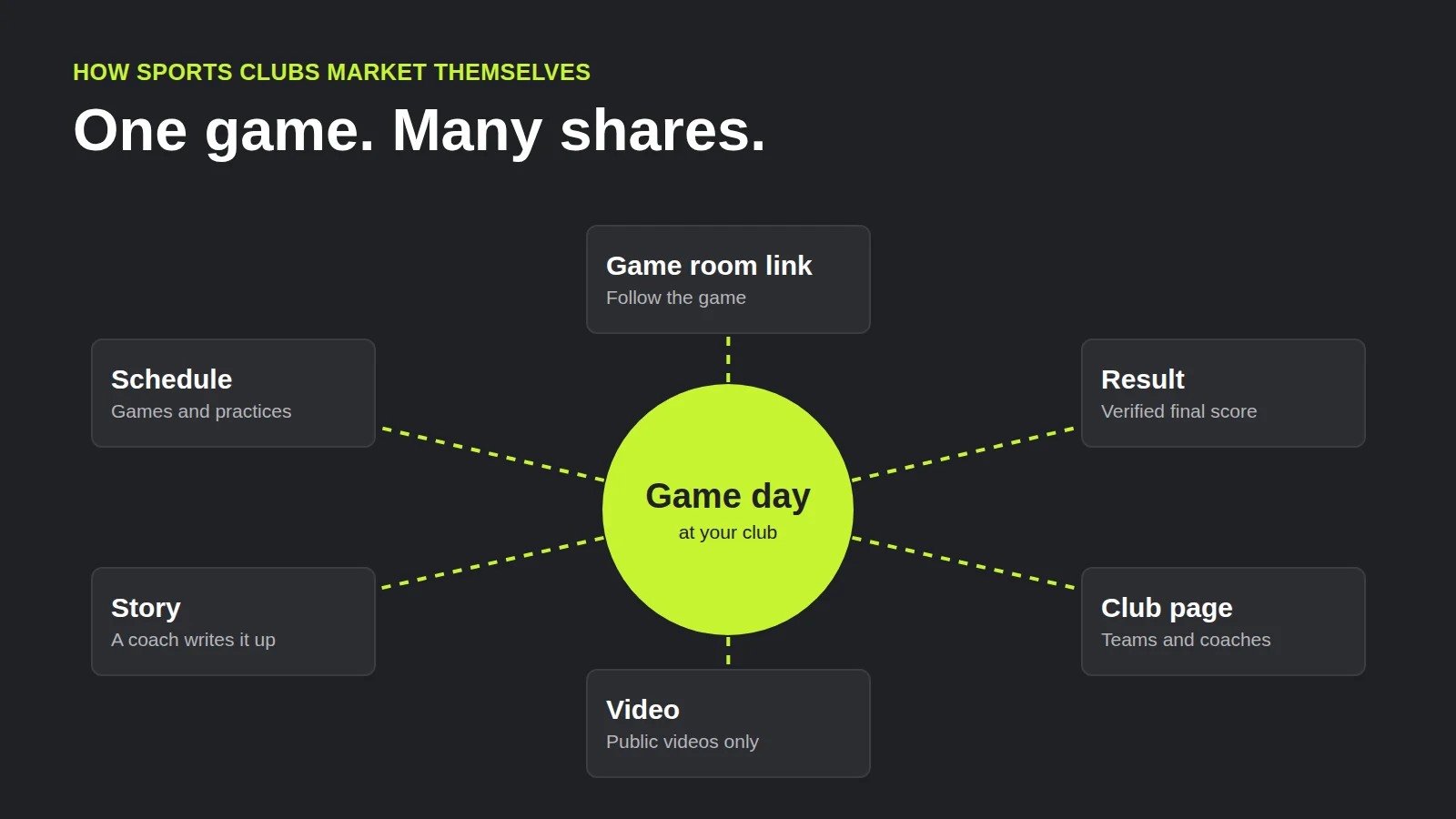
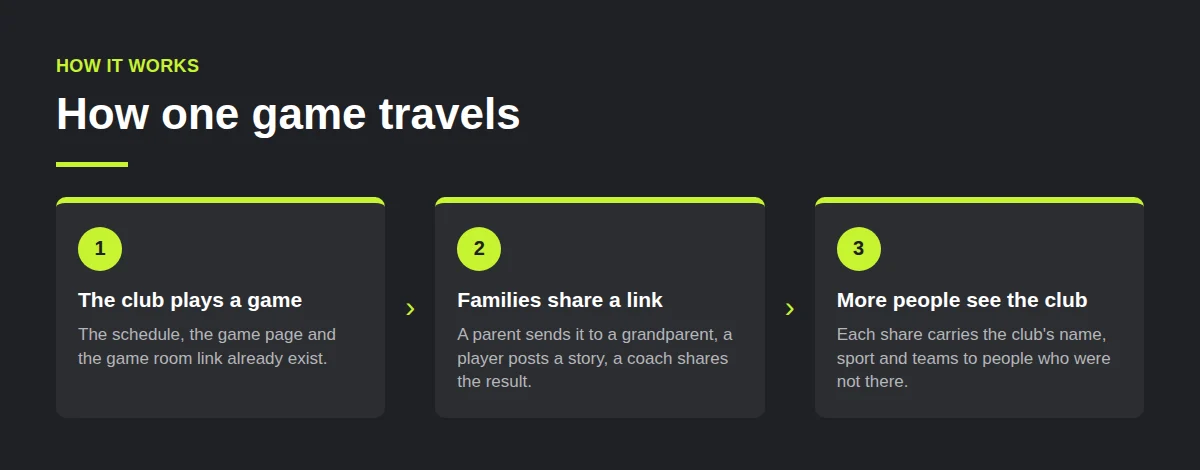
On Play 2 Earn Sports, the work a club already does each week also produces things people want to share. A schedule, a game, a result, a story, a video or a profile is a page with its own link and its own share card. When a parent sends a game link to a grandparent, or a coach shares a story about the team, that is a social signal: one more person sees the club's name, its sport and its people.
The club does not need a new campaign for each one. The public pages carry share buttons for Facebook, X, LinkedIn, WhatsApp, Pinterest, Reddit and Snapchat, and a share card sized for the major networks, so a link looks right when it is posted. Here are the tools, grouped by what they share and who can use them.
Pages anyone can open and share
- Public club page. A club on Play 2 Earn Sports can have a public page with its bio, coaches and teams, plus recent public stories from club members and public videos from the club's account. The page has its own share buttons and share card.
- A Join button on your own website. If your club runs a WordPress site, the Play 2 Earn Sports plugin adds a Join button that sends families to your club. A club without WordPress can copy a join link from the Website page of the club dashboard and use it anywhere.
- Tournament and game pages. A tournament hosted on Play 2 Earn Sports gets a public page with its dates, venues, host club, teams and game list, and each game has its own page. Both carry share buttons, so visiting clubs and families can pass the schedule along. See tournament scheduling software for how tournaments are built.
- Event pages for tryouts and club events. A public, published club event, such as a tryout day, gets its own public page, and its link can be sent to families and posted on the club's social accounts.
- Bracket generator. Anyone can build a bracket and, after confirming an email address, share a public link to it.
Game day
- Game rooms. A member who already has access to a scheduled club game can create a Match Pass link that lasts seven days. Relatives and friends who open it can follow the countdown and the verified result without an account. There is no public directory of youth game rooms; only people with the link can open one.
- Calendar files. A family member signed in to Play 2 Earn Sports can add a game or practice they can see to their own phone or computer calendar.
Stories, videos and profiles
- Stories. Coaches and players can publish stories. A public story gets its own page and share card, and recent public stories by club members appear on the club page.
- Videos. A video set to public gets its own watch page that can be shared. A video that is not public does not get a public page.
- Player profiles, awards and badges. Players can share their public profile and cards for their awards, badges and performance. A profile for a player under 14 is visible only within the club unless a parent chooses to make it public.
Reaching families and volunteers directly
- Email to your contact list. Club staff with permission to send communications can email the club's contact list from Communications, including a promoted tryout or club event. Contacts who unsubscribe are skipped on later sends.
- Volunteer promotions. Club staff with the Club tools permission can create a promotion with a title, a description and a video, and share it with its own share card.
- Invite links. Clubs and players can create a personal invite link. It opens a preview page that names the person who sent it.
- Join requests. A signed-in player or parent can ask to join a club from the club's registration page, and the club approves the request.
A simple weekly marketing routine for a club
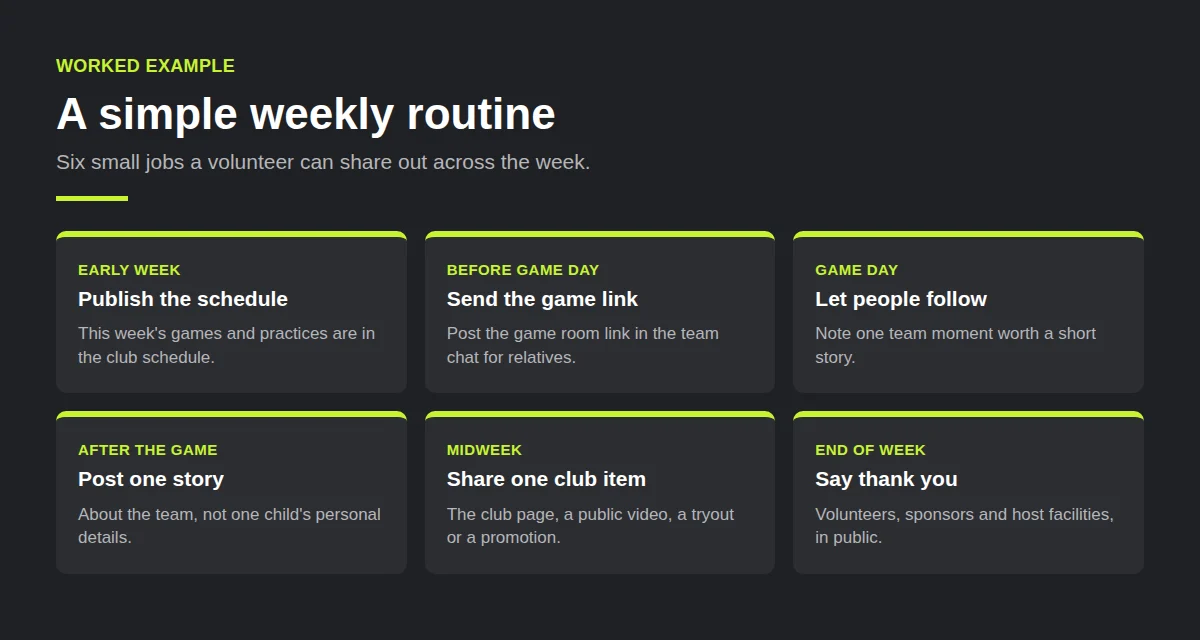
Early in the week: publish the schedule.
Check that this week's games and practices are in the club schedule. If you host a tournament, share its public page with visiting clubs and your own families.
Before game day: send the game link.
A coach, team manager or another member with access to the game creates the Match Pass link for the game and posts it in the team chat, so families can forward it to relatives who cannot be there.
Game day: let people follow along.
Families and friends follow the game room. Ask one volunteer to note a team moment worth a short story.
After the game: post one story.
A coach writes a short public story about the team: what it worked on, a good team moment, a thank-you to the host facility. Keep it about the team, not one child's personal details.
Midweek: share one club item.
Use the share buttons to post the club page, a public video, an upcoming tryout page or a volunteer promotion on the club's own social accounts.
End of week: say thank you in public.
Thank volunteers, sponsors, officials and host facilities. Then check that the club page is current for anyone who looks you up.
Share the club, protect the players
Youth club marketing should put the club, its teams and its volunteers at the front, not children's personal details. Do not post a child's full name together with their school, age, address or schedule, and ask a parent before a child appears in a photo or video the club shares. A written safe sport communication policy helps coaches know where the lines are.
Play 2 Earn Sports has controls that support this:
- A profile for a player under 14 is visible only within the club, and kept out of search engines, unless a parent chooses to make it public.
- A share card never shows a minor's date of birth.
- Only public videos get a public watch page.
- Game room links expire after seven days, and there is no public list of youth game rooms.
See how a club's week of games turns into links families can share.
Common mistakes
- Posting only at registration time. A club that goes quiet for months is easy to forget. Share one small thing each week.
- Marketing the club without a next step. Each post should lead somewhere: the club page, a tryout page or a join link.
- Sharing children's details. Keep posts about the team, and follow each parent's wishes on names, photos and video.
- Letting the club page go stale. Update coaches, teams and contact details before each season.
- Treating a sponsor as a logo on a banner. Thank them in public and tell them how the season went.
Clear, predictable communication is part of marketing too: families recommend clubs that are easy to deal with. See how to improve youth sports club communication for a one-hour communication audit, and sports club management software for the schedule, chat and club pages in one place.
Frequently asked questions
Most clubs combine a current website or club page, regular social posts about real club life, word of mouth from current families, and a visible presence at games, tournaments, community events and with local sponsors and partners. The steady approach is to share something small every week rather than only at registration time.
Be easy to find and easy to try. Keep a current club page, run open sessions or tryout days, show up at community events, and give current families a link they can forward. A friendly, quick first reply matters as much as the post that brought the family in.
Start with the families you already have: ask them to bring a friend, and give them an invite link or a tryout page to share. Add a free clinic or open practice, work with local schools and facilities, and keep posting so a family who looks you up sees an active club. Keep children's personal details out of public posts.
Real club life: the week's schedule, game days, results, a short story after a game, coach and volunteer thank-yous, tryout and event dates, and thank-yous to sponsors. Post on a steady rhythm, lead with teams rather than individual children, and follow parent wishes on names and photos.
Sponsors tend to notice clubs that look active and organized. A current club page, regular posts, well-run events and public thank-yous show a business that the club is visible in its community. Approach local businesses with a short, honest description of the club and how you would thank them, and keep them posted through the season. No club can count on a sponsor; what a club controls is how clearly it shows up.
A profile for a player under 14 is visible only within the club, and kept out of search engines, unless a parent chooses to make it public. A share card never shows a minor's date of birth, and only public videos get a public watch page.
Play 2 Earn Sports is free for clubs and leagues, with a US$3.99 platform fee per registration that the club covers or passes on to families.
Related guides
Keep teams, schedules and family messages together with club management tools for youth sports, compare current plans and pricing, or request a demo.
