
What should you wear to a hockey game?
Wear a moisture-wicking base layer, jock or jill, hockey socks, and a single pair of skate socks under your gear. Add a warm jacket and pants for before and after the game, and bring a water bottle and spare laces.
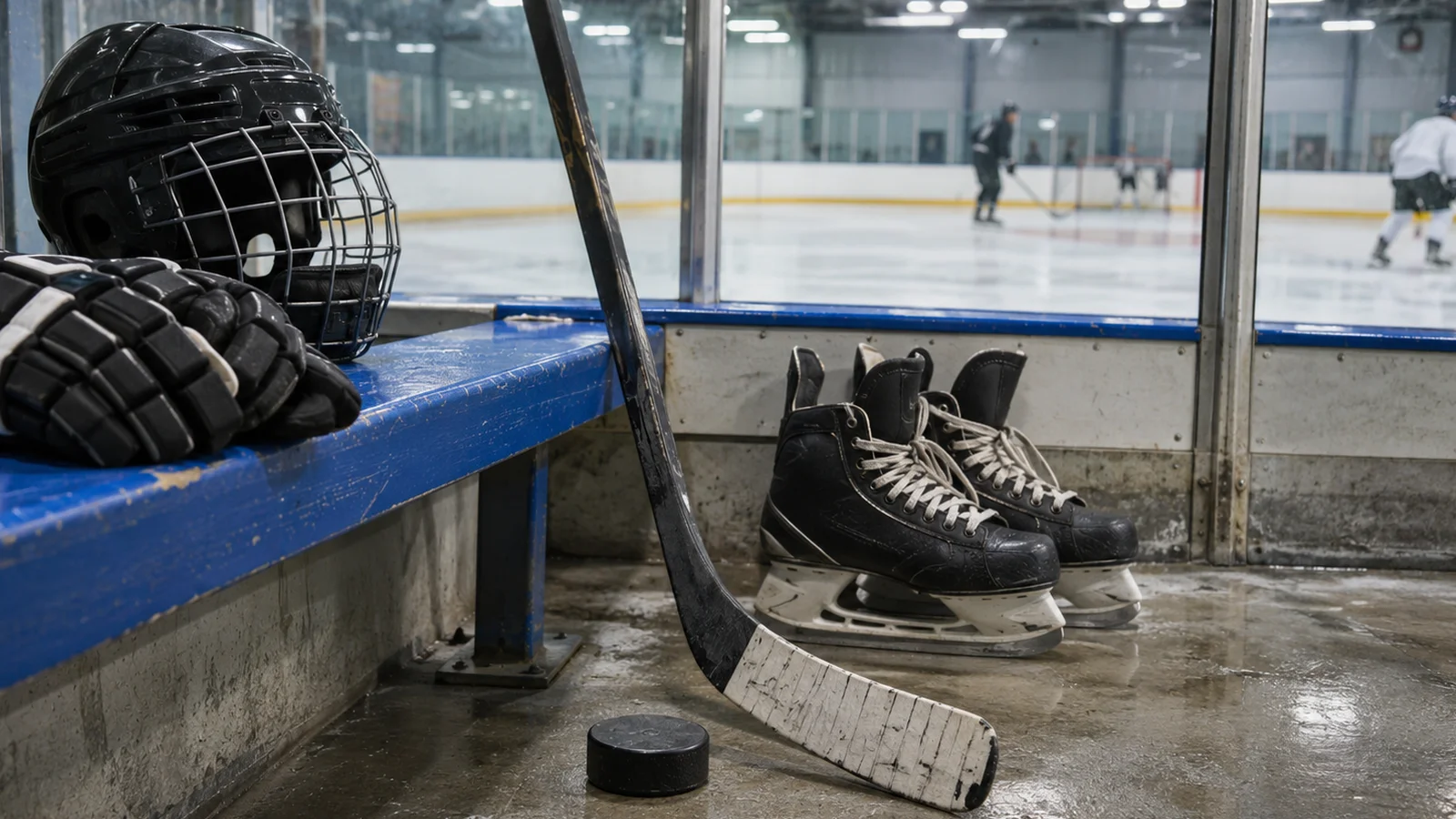
Last updated
- Avoid cotton next to your skin.
- Pack warm clothes for the ride home.
- Do not wear jewelry on the ice.
Worked example: packing a U9 bag for a 7 a.m. game
Start with the layer that touches skin: a clean, moisture-wicking base layer top and bottom. Add the jock or jill, pull hockey socks over the shin pads, then step into the pants. Skates go on over one pair of socks, and the jersey goes on last, over shoulder and elbow pads. Pads meant to sit under the uniform have to be in place first.
Then pack the rink bag: helmet with its facial protector, gloves, a water bottle, spare laces, and a warm jacket and pants for afterwards. A dry base layer for the ride home earns its space. Packed the night before, the morning is only about dressing, not hunting for a missing elbow pad.
What has to sit under the jersey
Hockey Canada's Rule 3.6 is specific: all protective equipment except gloves, head gear and goaltender's leg pads must be worn entirely under the uniform. That is why shoulder pads, elbow pads and shin pads disappear under the jersey and socks rather than sitting on top.
The same rule requires a CSA-certified hockey helmet with a CSA-certified facial protector securely attached and not altered, plus chin straps fastened under the chin. In minor and female hockey, a BNQ-certified throat protector is required as well. These are the minimum items the rulebook names, not optional comfort gear.
Base layer, skates and socks
Hockey Canada's safety material asks players to choose an undergarment arrangement that stays cool and comfortable under the equipment, and to wear a single pair of socks in the skates. Two pairs bunch, trap moisture and change how the boot fits, so pick one pair of thin skate socks and keep a dry spare in the bag.
Skates are not optional either: Rule 3.4 says no player may take part unless wearing skates, and it prohibits speed skates and figure skates because of the injury risk. The skates in the bag need to be hockey skates, sharpened and tied before warm-up.
Clothes for before and after the game
Rinks are cold on the bench and colder in the parking lot, so the outfit does not end at the dressing room door. Bring a warm jacket and pants that pull on over the base layer, plus shoes or slides for the walk to the car. A hat and gloves help if the arena is chilly and the game is early.
Keep the warm layer separate from the gear you sweat in. A dry hoodie or jacket for the ride home beats sitting in a damp base layer, and it keeps the car seat dry.
What not to wear on the ice
Leave jewelry at home. Rings, earrings and watches can catch on a cage, a glove or another player. The same goes for loose drawstrings, and long hair should be tied back so it stays clear of the helmet and the eyes.
Skip figure skates and speed skates even if that is what is in the garage; Hockey Canada's skate rule prohibits both for game play. And do not add a second pair of socks to fill out a boot that is too big, because the fit problem stays and the extra fabric does not help.
Frequently asked questions
Do you wear anything under hockey pants?
Yes: a base layer, then a jock or jill. Hockey pants have padding, but they are not designed to be worn against bare skin, and the base layer moves sweat away from the body. Hockey socks go over the shin pads and tuck under the pants.
Can you wear a hoodie under a hockey jersey?
A thin base layer works better. A hoodie adds bulk under shoulder pads, its drawstrings can hang loose, and the hood bunches at the neck under the helmet. If the rink is cold, wear a warmer base layer and save the hoodie for before and after the game.
Is a throat protector required?
In minor and female hockey, Hockey Canada requires a BNQ-certified throat protector. The rule also requires a CSA-certified helmet with a CSA-certified facial protector and a fastened chin strap. Adult recreational leagues set their own rules, so check with the league before treating a neck guard as optional.
What should a spectator wear to a hockey game?
Warm layers, a jacket, and shoes that can handle a cold arena and a slushy parking lot. Add a hat and gloves for early-morning games, and bring a blanket if you plan to sit in the stands. Spectators do not need hockey gear, but dressing warmer than the outdoor forecast is wise.
Sources
Hockey questions · Find a hockey team
Running a club or league? See Play 2 Earn Sports, a SportsEngine alternative, build a league schedule, or make a printable bracket.
Open Next Play