
Is hockey safer than football?
There is no clear yes. Both are contact sports with injury risk, and safety depends on rules, coaching, equipment and level of play. Hockey's risk drops when body checking is delayed and helmets, face guards and neck protection are required.
Last updated
- Check the league's checking and head-contact rules.
- Make sure gear is certified and fits.
- Ask about emergency action plans.
Why there is no clear winner on safety
Both are contact sports, and neither has a single injury rate that settles the question. The American Academy of Pediatrics says that as player size and the speed of the game increase, injury rates and severity rise, but that the risk of injuries can be reduced with the right equipment, rules and coaching.
That means the safer choice is often the league, not the sport. A well-run hockey program with strict head-contact rules and fitted gear can be safer than a poorly run football program, and the reverse is also true.
Body checking rules in hockey and football
Hockey Canada banned body-checking at the U13 level, and all games at U13 and below are non-body-checking games. In the United States, the AAP notes that body checking is allowed in league hockey at the age of 11 to 12 years, although the age can be younger in some leagues.
Football guidance from the AAP refers to blocking and tackling throughout, so contact is part of normal play. The advice focuses on technique, fitted equipment and enforcing the rules rather than removing contact from the game.
Head injuries and protective equipment
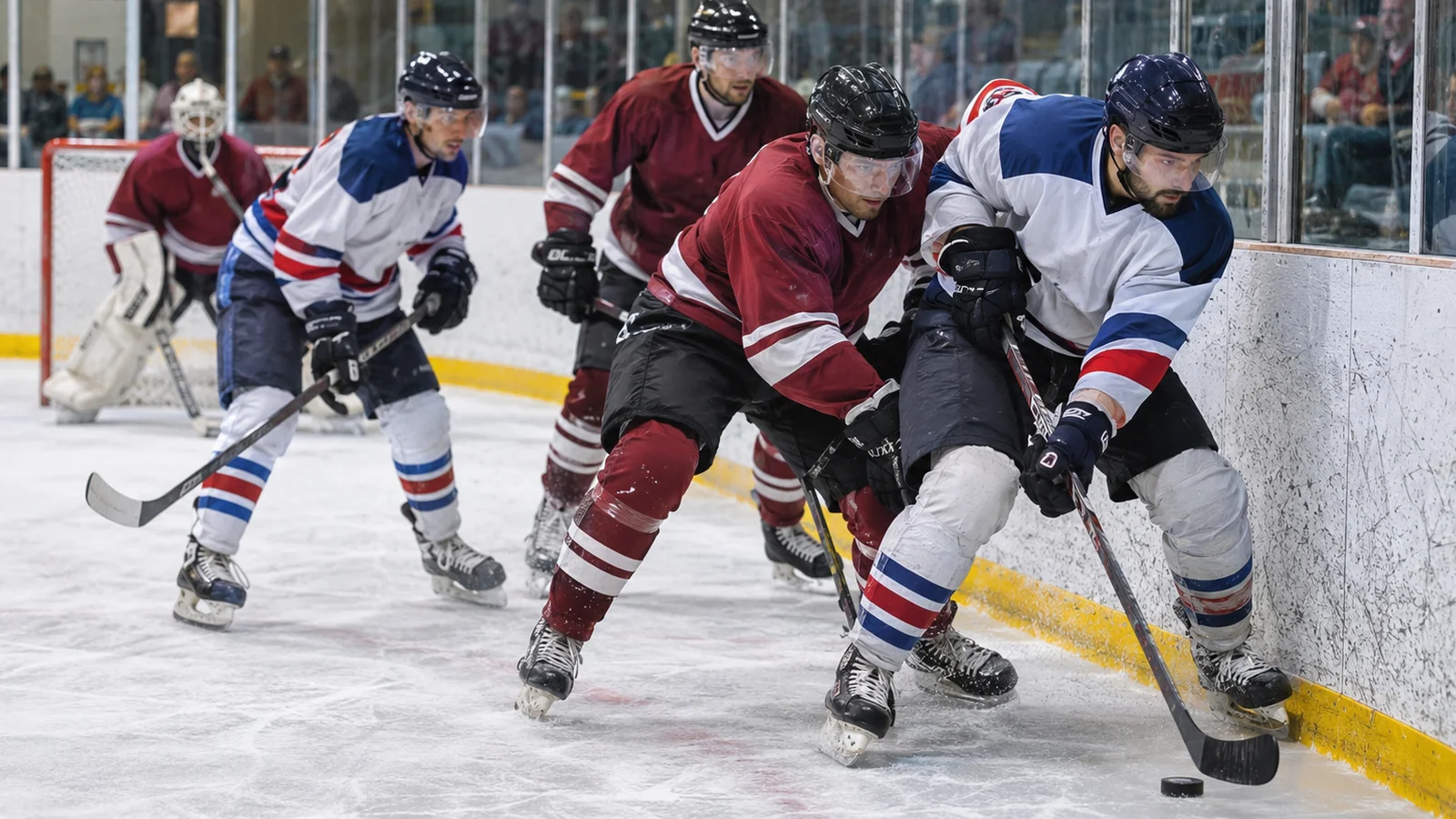
Concussions happen in both sports. Hockey concussions most often come from a blow to the head, falls, or being checked into the boards, according to the AAP. Football concussions occur when the head or neck hits the ground, equipment or another athlete.
Helmets and face guards lower the risk of eye, face and dental injuries, but the AAP is clear that mouth guards do not prevent concussions. In US high school ice hockey, the NFHS now requires every player to wear a neck laceration protector during competition, in its original manufactured state.
Which injuries are more common in each sport
The AAP notes that knee injuries are more common in hockey than ankle injuries, because a stiff skate boot protects the ankle and Achilles tendon. Hockey knee injuries happen when the knee is forced or twisted to the side or back.
In football, ankle sprains are among the most common injuries, often when a player is blocked or tackled with the foot planted. Football also brings finger injuries from the ball or contact, and shoulder injuries from blocking, tackling or diving.
What to check before signing a child up
Ask for the league's checking and head-contact rules, and confirm the age when body checking starts. Check that helmets are certified and fitted, that face and neck protection meet the league's requirements, and that gear is inspected as the player grows.
Ask whether the program has a written emergency action plan. The AAP says hockey programs can train a team to respond to injuries because play rarely stops while a player is treated, and that the plan should include first aid and emergency contacts. Any player with a suspected concussion should see a doctor before returning.
Frequently asked questions
Is youth hockey safer than youth football?
There is no clear yes or no. Both are contact sports, and the risk depends on the league's rules, the coaching, the equipment and the level of play. Compare the specific programs: checking age, head-contact policy, helmet and neck protection rules, and emergency planning matter more than the sport's name.
At what age does body checking start?
It depends on the country and league. Hockey Canada bans body-checking at U13 and below. In the United States, the AAP says league hockey allows body checking at 11 to 12 years, and some leagues start younger. Ask the local association for its exact rule before registering.
Do football helmets prevent concussions?
No helmet prevents every concussion. The AAP says mouth guards can help prevent oral or facial injuries but not concussions, and that helmets must be fitted so they do not move on the head. A player with a suspected concussion should be removed and see a doctor before returning.
Is neck protection required in hockey?
In US high school hockey, yes. The NFHS requires all players to wear a neck laceration protector during competition, in its original manufactured state. If it comes off during play, the player must leave the ice until it is properly refitted. Check your league's rule, because youth requirements vary by country.
Which sport has more knee injuries?
Both can injure knees, but the patterns differ. The AAP says knee injuries are more common than ankle injuries in hockey because the skate boot protects the ankle. In football, ankle sprains are among the most common injuries, and knee injuries often come from cutting, pivoting, landing or contact.
Sources
Can hockey equipment go in the dryer · Hockey questions · Sports App For Parents
Running a club or league? See club management software, moving off LeagueApps, bracket generator, or league schedule maker.
Find a club