
How do you teach football to beginners?
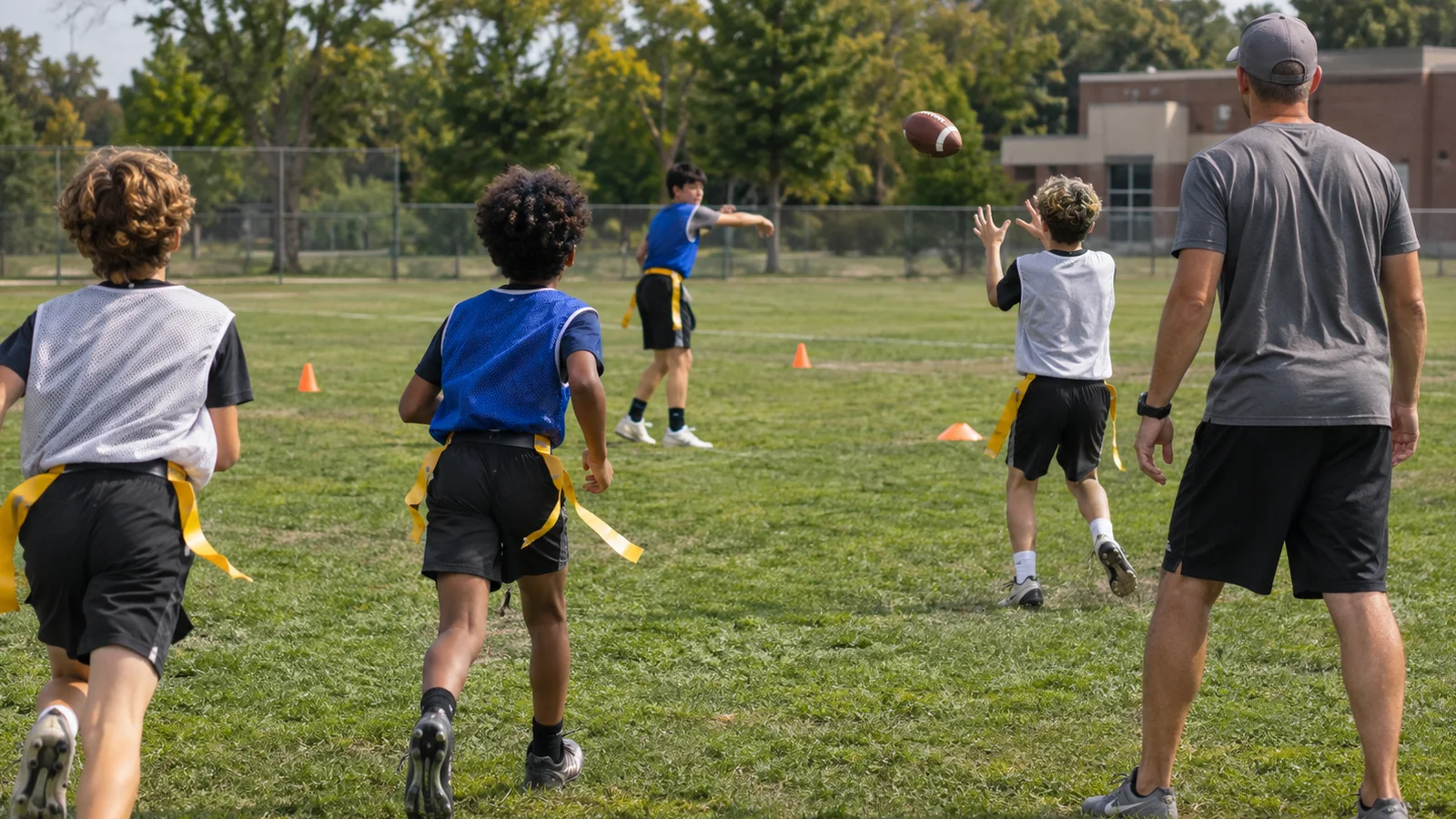
Start with flag football and teach one skill at a time: stance, snapping, handing off, catching, and flag pulling. Use short stations, simple plays, and plenty of reps before adding contact. Explain positions in plain language, praise effort, and finish with a fun game so beginners leave wanting more.
Last updated
- Begin with non-contact flag fundamentals.
- Teach stance, ball handling, catching, and flag pulling.
- Use short stations and simple plays.
- End practice with a fun scrimmage.
Why should beginners start with flag football?
Flag football removes tackling, diving, blocking, and screening. Players wear flags on a belt, and a defender ends the play by pulling a flag instead of making contact. That makes it easier for a new player to learn spacing and rules without worrying about collision technique.
NFL FLAG teams play five on five, with up to 10 players on a roster, and the field is smaller than a tackle field: 30 yards wide and 70 yards long (27.4 m by 64 m), with two 10-yard (9.1 m) end zones. A smaller field means more touches and shorter explanations.
How do you teach the first skills?
Teach one skill per station: stance, snap, handoff, catching, and flag pulling. Demonstrate the skill, let each player try it, then rotate. Keep the line short so every beginner gets repeated reps instead of watching.
Use a simple rule for the quarterback: the NFL FLAG rulebook gives the quarterback 7 seconds from the snap to release the ball. In a drill, count the seconds out loud so beginners learn the rhythm before they face a defense.
How do you explain positions to new players?
Start with the five flag positions: quarterback, center, and three receivers or backs. There are no offensive linemen in five-on-five, so every player can catch a pass. On defense, beginners only need to know rushers and defensive backs.
Show each position on the field instead of drawing it on a board. Walk the quarterback to the snap spot, put the center over the ball, and place receivers on the line. Then run the same formation until players line up without reminders.
What simple rules should beginners learn first?
Teach downs before plays. The offense starts with four downs to cross midfield; once it crosses, it has three downs to score. A touchdown is 6 points, a safety is 2 points, and the offense can try a 1-point conversion from the 5-yard line or a 2-point conversion from the 10-yard line.
Keep the language short: four downs, midfield, end zone, and flags. Whistle a play dead when a flag is pulled or the ball hits the ground. Beginners learn faster when every stoppage has one clear reason.
What equipment and safety rules matter for beginners?
Flag football needs flags and a belt, shorts without pockets, a mouthguard, and cleats. The rules require a mouthguard, and metal cleats are not allowed in most leagues. No helmet or shoulder pads are needed for flag.
Check the league's age divisions before registering. NFL FLAG offers leagues for boys and girls from 5 to 17 years old, and local leagues may split those ages differently. Confirm the contact rules for your age group, because some seven-on-seven leagues allow limited contact.
Frequently asked questions
What age can kids start flag football?
NFL FLAG offers leagues from 5 to 17 years old, so five is the youngest listed age. At that age, keep sessions short and focus on running, catching, and pulling flags. Check your local league for its own age cut-off and team format.
How many players are on a beginner flag team?
NFL FLAG teams compete five on five, and the rules allow up to 10 players on a roster. That roster size gives every player reps and covers absences. Local leagues may use six-on-six, seven-on-seven, or nine-on-nine formats, so confirm the format before you buy equipment.
Do beginners need helmets and pads?
Not for flag football. The only required protective gear in NFL FLAG rules is a mouthguard, and metal cleats are not allowed in most leagues. Tackle football adds a helmet and pads, so check with your league before buying equipment for a contact division.
How long should a beginner practice be?
Keep it short enough that players stay focused and finish wanting more. A common approach is a brief warm-up, two or three skill stations, a simple team period, and a game. Use the league's field time and the players' attention span to set the length rather than copying an older team.
Sources
Football questions · First Time Youth Coach
Running a club or league? See software to run a sports club, leaving SportsEngine, free round robin generator, or build a tournament online.
Explore Club OS