
How long is a football field?
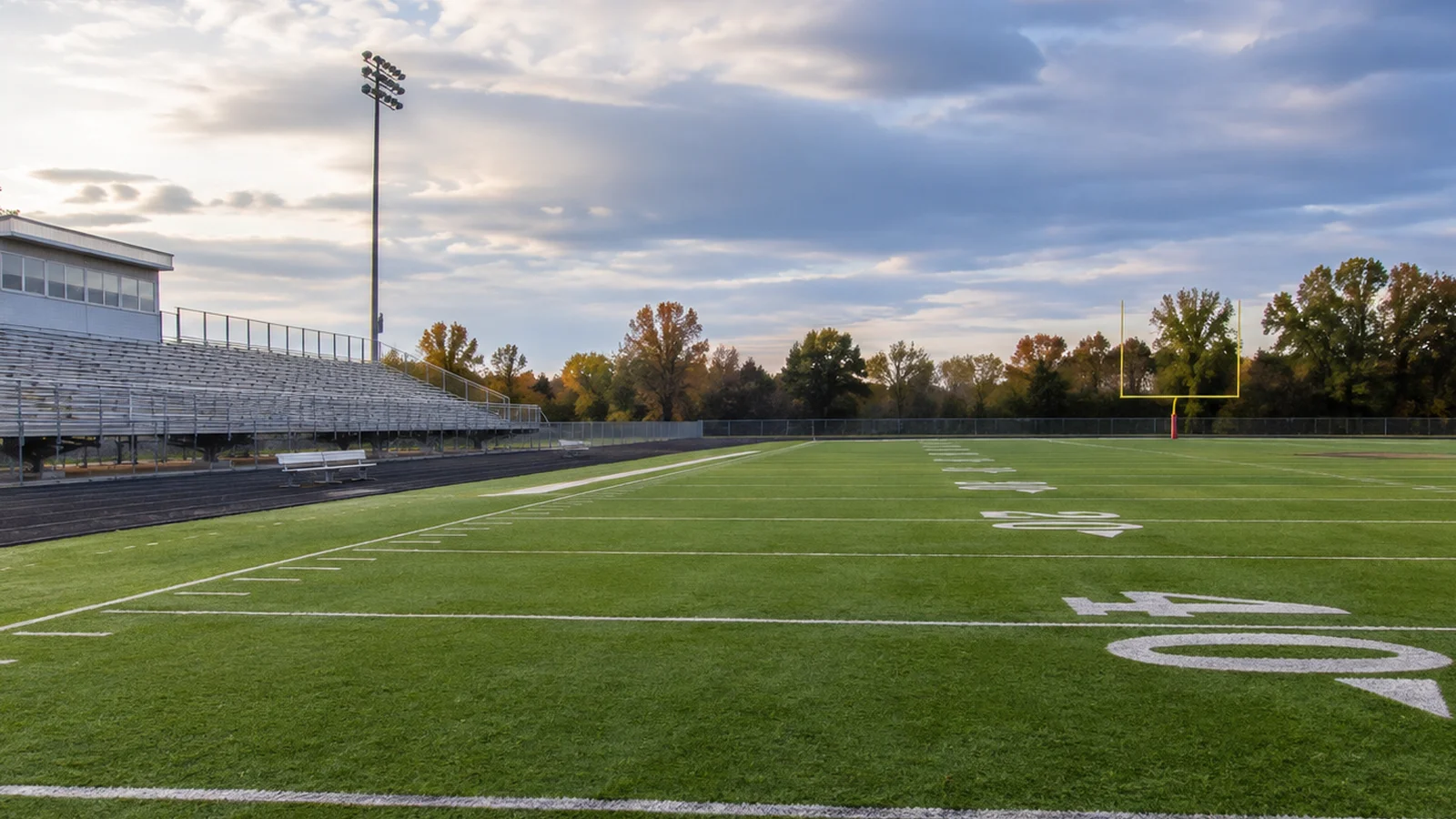
An American football field is 100 yards between the goal lines and 120 yards including both 10-yard end zones. It is 160 feet wide. Youth and flag fields are often smaller, so check the markings before a game. The goal lines sit 10 yards inside each end line.
Last updated
- Goal lines sit 10 yards inside each end line.
- Hash marks divide the field into narrower zones.
- End zones count toward the total field length.
- Check local markings before a youth game.
How long is a football field between the goal lines?
The playing area between the two goal lines is 100 yards (91.4 m) long. Each end line sits 10 yards (9.1 m) beyond its goal line, so the full field from end line to end line is 120 yards (109.7 m). That extra distance is end zone, not open field, which is why a pass from one goal line cannot be completed for a touchdown at the other goal line.
The NFL rulebook sets the field at 160 feet (48.8 m) wide, or 53.3 yards. Those measurements describe the standard American field used in professional football; local youth and flag leagues often mark smaller areas, so check the lines and pylons before a game.
What the white lines and hash marks mean
NFL markings are measured in inches as well as yards. The playing field is rimmed by a solid white border six feet (1.8 m) wide along the end lines and sidelines. All lines are four inches (10.2 cm) wide, except the goal line and yellow lines, which are eight inches (20.3 cm) wide.
Inbounds hash marks sit 70 feet 9 inches (21.6 m) from each sideline in professional football and 60 feet (18.3 m) in college football, measured to the inbound edge of the hash. Sitting 60 feet in puts the college rows closer to the sidelines and farther apart from each other than the pro rows, so more college snaps start nearer a sideline. The NFL rows sit closer together, which keeps more pro plays nearer the middle of the field.
Flag football and youth field sizes
Flag football uses a smaller field. NFL FLAG describes its field as 30 yards (27.4 m) wide and 70 yards (64 m) long, with two 10-yard (9.1 m) end zones and a midfield line-to-gain. The shorter layout reduces the running distance between snaps.
Because the field is shorter, flag rules use a midfield line-to-gain instead of the tackle football first-down system: the offense has four downs to cross midfield and then three downs to score. No-run zones sit five yards from each end zone and on either side of midfield, so teams must pass near the goal line.
Goal posts, padding and safe field checks
Length is only part of the measurement. The AAP advises that a safe playing field is level and cleared of debris, equipment and other obstacles, and that field goal posts should be padded. For a parent or coach setting up a youth game, walk the goal lines and end lines, confirm the four corners are marked by pylons, and check the goal post padding before warmups.
The NFL rulebook marks the four corners with pylons at the inside edges of the white lines. Those pylons, plus the padded goal posts, are the visual cues players use near the end zone, so check them before warmups along with the field surface.
Frequently asked questions
Is a football field 100 yards or 120 yards long?
Both numbers are right, but they measure different things. The field of play is 100 yards (91.4 m) from goal line to goal line. The full field is 120 yards (109.7 m) because each end zone adds 10 yards (9.1 m) beyond a goal line. Broadcasters usually quote the 100-yard figure.
How wide is a football field in feet and metres?
An NFL field is 160 feet wide, or 48.8 metres, which is 53.3 yards. The width does not change when the end zones are included; the 120-yard length runs end line to end line. Flag fields are smaller, at 30 yards (27.4 m) wide under NFL FLAG rules.
How long is a flag football field?
NFL FLAG lists a 70-yard (64 m) field with two 10-yard (9.1 m) end zones, 30 yards (27.4 m) wide. The offense must cross a midfield line-to-gain rather than a series of first-down lines, so the shorter field still uses four downs to reach midfield and three downs to score.
What are hash marks and why do they differ?
Hash marks are the short inbounds lines that show where the ball is placed. College rows stand 60 feet (18.3 m) from each sideline and the NFL rows 70 feet 9 inches (21.6 m). The wider gap between the college rows lets a ball be placed closer to a sideline, while the tighter NFL rows keep placement nearer the middle.
Sources
Football questions · Find a american football team
Running a club or league? See free club management software, leaving SportsEngine, bracket generator, or build a tournament online.
Open Next Play