
What equipment do you need for soccer?
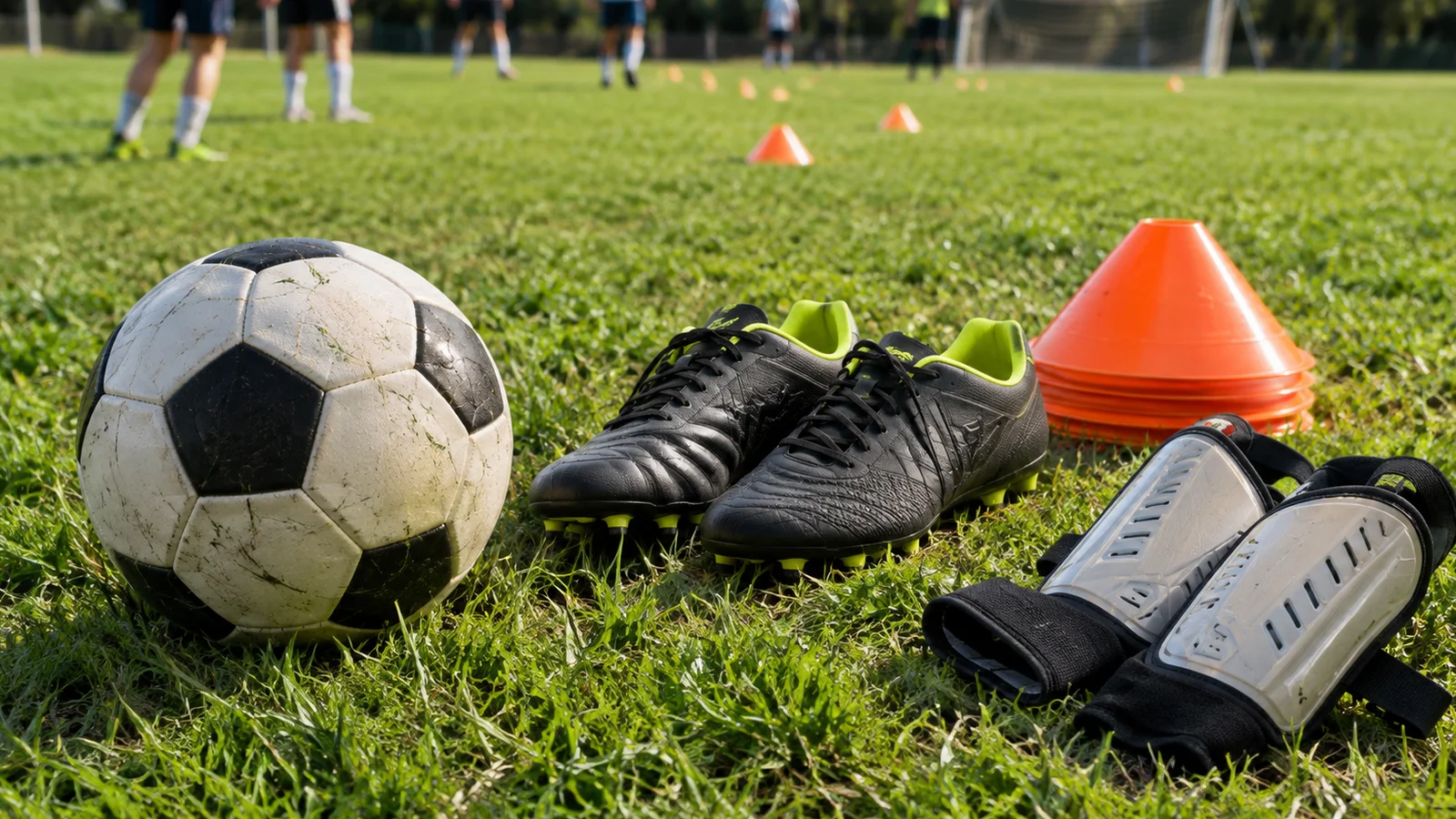
You need a shirt, shorts, soccer socks, shin guards, and cleats or turf shoes. A ball and water bottle are essential for practice. Goalkeepers need gloves. Avoid jewelry, and make sure shin guards stay under the socks. Your club may supply a uniform, so confirm before buying.
Last updated
- Choose cleats for the surface you play on.
- Bring a pump and extra water.
- Label your gear and ball.
- Ask the club about uniform colors.
The five items the Laws make compulsory
Law 4 of the Laws of the Game lists five compulsory items for a player: a shirt with sleeves, shorts, socks, shinguards and footwear. Shinguards must be made of a suitable material, be an appropriate size to give reasonable protection, and be covered by the socks.
In the United States, AYSO applies the same idea to training as well as matches: shin guards are mandatory during practice and games, and full-coverage shoes are required. A player who loses a boot or shinguard during play must replace it no later than when the ball next goes out of play.
Cleats, metal studs and toe cleats
Soccer cleats are not one fixed design. AYSO says the common claim that toe cleats are illegal is too narrow a statement, because some soccer shoes now wrap cleats across the toe. Metal cleats, usually aluminium, are acceptable, but the referee must inspect them for burrs or sharp edges, and any found must be removed before the player takes part.
Hard protection is treated differently. AYSO does not allow face masks like those worn by hockey goalies or football players, for keepers or field players, because they are built from hard material and would endanger others. Soft padded protection is permitted by Law 4, which names gloves, headgear and soft knee and arm protectors.
What the club supplies and what you buy
Do not buy everything before the first session. AYSO says only a limited number of balls are supplied, but it is ideal for every child to have their own ball for practice away from team sessions. Most AYSO teams also play in uniforms supplied by the Region and included in the registration fee, and Regions provide field equipment such as goals, nets and flags.
If you register with a Canadian club, ask the registrar what the fee includes before buying a kit, because the answer is set by the club rather than by the Laws. A spare ball, a pump and a water bottle remain useful in either country.
Match ball sizes and specifications
The Laws also set the specification for a match ball. It must be spherical, made of suitable material, measure between 68 cm (27 ins) and 70 cm (28 ins) around, and weigh between 410 g (14 oz) and 450 g (16 oz) at the start of the match.
Inflation matters too. Law 2 gives a match pressure of 0.6 to 1.1 atmospheres, or 8.5 to 15.6 lb/sq in at sea level. A soft ball slows the game and an over-inflated one is unpleasant to head or trap, so check the pressure at home rather than at the field.
Goalkeeper equipment
Goalkeepers need the same five items plus a shirt colour that stands apart. The Laws require each goalkeeper to wear colours distinguishable from the other players and the match officials. Gloves are permitted as non-dangerous protective equipment rather than required, and keepers may wear tracksuit bottoms.
If both goalkeepers arrive in the same colour shirt and neither has a spare, the referee still allows the match to be played. Pack a second keeper shirt anyway, because the rule only covers the case where no alternative exists.
Frequently asked questions
Do shin guards have to be worn at practice?
AYSO says yes: shin guards are mandatory during practice and games, not only on match day. The Laws add that shinguards must be suitable, appropriately sized and covered by the socks. A guard that cannot be covered leaves the player open to being asked to correct it.
Are metal cleats allowed in youth soccer?
AYSO accepts metal cleats, usually aluminium, as long as the referee inspects them and finds no burrs or sharp edges. Any burr must be removed before the player takes part. The blanket belief that metal or toe cleats are banned is not accurate under AYSO guidance.
Should my child bring their own soccer ball?
It helps. AYSO supplies a limited number of balls, but says it is ideal for every child to own one for practice and play away from team sessions. A correctly inflated ball at home makes short practice sessions possible when no club equipment is available.
What extra gear does a goalkeeper need?
A goalkeeper needs a shirt colour that differs from teammates and officials, plus optional gloves and tracksuit bottoms. Law 4 permits gloves as protective equipment but does not require them. Bring a spare keeper shirt in case the opposing keeper wears the same colour.
Sources
Do you need soccer cleats for tryouts · Soccer questions · Find a soccer team
Running a club or league? See Play 2 Earn Sports, switching from TeamSnap, free tournament maker, or make a printable bracket.
Open Next Play