
What should you wear to a soccer game?
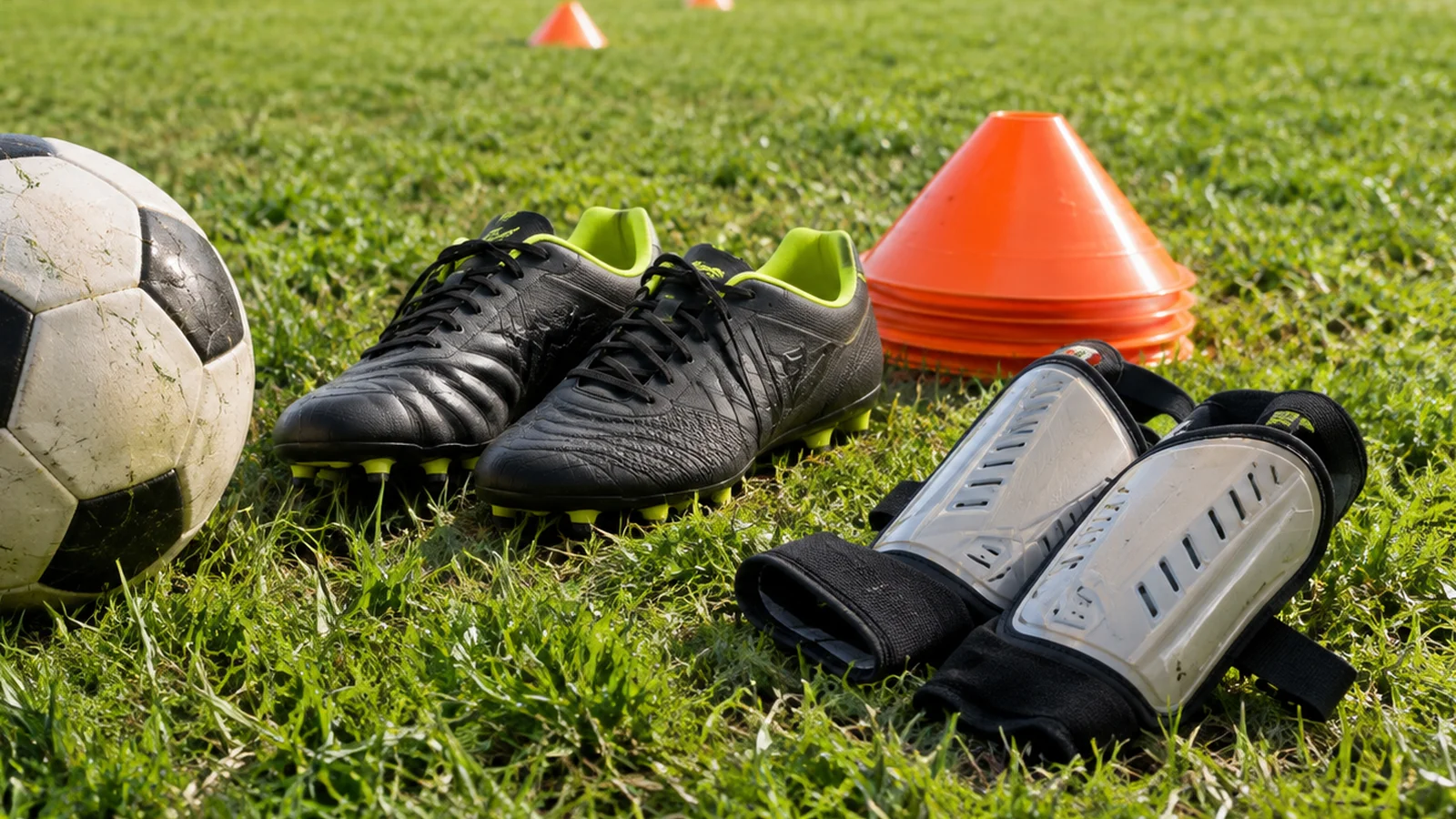
Wear your club uniform: jersey, shorts, and socks, with shin guards underneath the socks and cleats that suit the field. Bring both jersey colors if the club asks. Remove all jewelry. Goalkeepers wear a distinguishable color and may wear gloves. Confirm the team's sock and tape color rules before match day.
Last updated
- Pack water, a ball, and a warm layer.
- Check the field surface for the right footwear.
- Arrive early for warm-up and equipment check.
- Keep spare socks and hair ties in your bag.
The five items the referee checks
A soccer uniform is defined by Law 4: a shirt with sleeves, shorts, socks, shinguards and footwear. The shinguards must be suitable, the right size for reasonable protection, and covered by the socks. Footwear is a listed item, not an optional extra.
Equipment failures happen in warm-ups and early tackles. If a boot or shinguard is lost accidentally, the player must replace it as soon as possible and no later than when the ball next goes out of play. A goal scored in that window still counts.
Jewellery that must come off
All jewellery is forbidden in a match, including necklaces, rings, bracelets, earrings, leather bands and rubber bands. The Laws say it must be removed, and that tape over jewellery is not permitted. Accessories are allowed only if they are not dangerous and are safely and securely covered.
Players are inspected before the start of the match and substitutes before they enter. A player wearing a banned item is ordered to remove it or leave at the next stoppage, and a player who refuses or puts it back on is cautioned. A medical alert bracelet is a common exception: AYSO allows it when it is secured and the information stays visible.
Shirt colours, undershirts and undershorts
The two teams must wear colours that distinguish them from each other and from the match officials. Each goalkeeper must also be distinguishable from the other players and the officials. If both keepers arrive in the same colour and neither has a spare, the referee still allows the match.
Layers have their own rules. An undershirt must be a single colour matching the main colour of the shirt sleeve, or a pattern that exactly replicates the sleeve. Undershorts and tights must match the main colour of the shorts or their lowest part, and teammates must wear the same colour.
Glasses, casts and hard protection
Players who need prescription glasses may wear them in practices and games, and AYSO recommends a retaining strap or rubber band. Prescription goggles are permitted with the referee's approval before kickoff, but spectacle guards made of plastic or other hard material are not.
Casts and splints are treated as dangerous rather than as protective gear. AYSO rules bar a player from practicing or playing with any type of cast or splint, and removing one at the field to play disqualifies the player. Soft padded knee and arm protectors are permitted under Law 4.
Hats and cold weather
Players are generally not allowed to wear hats, though items that secure hair, such as sweatbands and bandanas, are sometimes permitted. A soft hat without a hard brim may be allowed in bad weather, and a goalkeeper may wear a soft brimmed cap. Baseball caps with hard brims are not acceptable, even backwards.
Head covers also have a colour rule. Where they are worn, Law 4 requires them to be black or the same main colour as the shirt, provided teammates wear the same colour. Any headwear still needs referee approval and must not endanger another player.
Frequently asked questions
Can you wear jewellery if it is taped down?
No. The Laws forbid all jewellery and state that using tape to cover it is not permitted. The item must be removed before the player takes part. Accessories are allowed only when they are not dangerous and are securely covered, which is not the same as taping a ring.
What happens if a player forgets their shin guards?
The player cannot play in that state. The referee instructs the player to leave the field to correct the equipment, and the player must have it checked by a match official before re-entering. AYSO makes shin guards mandatory for practices as well as games.
Can a player wear glasses during a soccer game?
Yes. AYSO says players who need prescription glasses may wear them in practices and games, with a retaining strap or rubber band for safety. Prescription goggles need the referee's approval before kickoff, and hard spectacle guards are not permitted.
Can a player wear a cast or splint?
Under AYSO rules, no. A player may not practice or play with any type of cast or splint, and removing it at the field to participate disqualifies the player. Soft padded protectors, such as knee and arm pads, are treated differently and are permitted by Law 4.
What does a goalkeeper wear that field players do not?
A goalkeeper wears a shirt colour that is distinguishable from teammates and officials. Gloves are optional protective equipment, and keepers may wear tracksuit bottoms or a soft brimmed cap. If both keepers have the same colour, the referee still allows play when neither has a spare.
Sources
Soccer questions · Find a soccer team
Running a club or league? See Play 2 Earn Sports, switching from Spond, build a league schedule, or free tournament maker.
Open Next Play