
How do you teach basketball to kids?
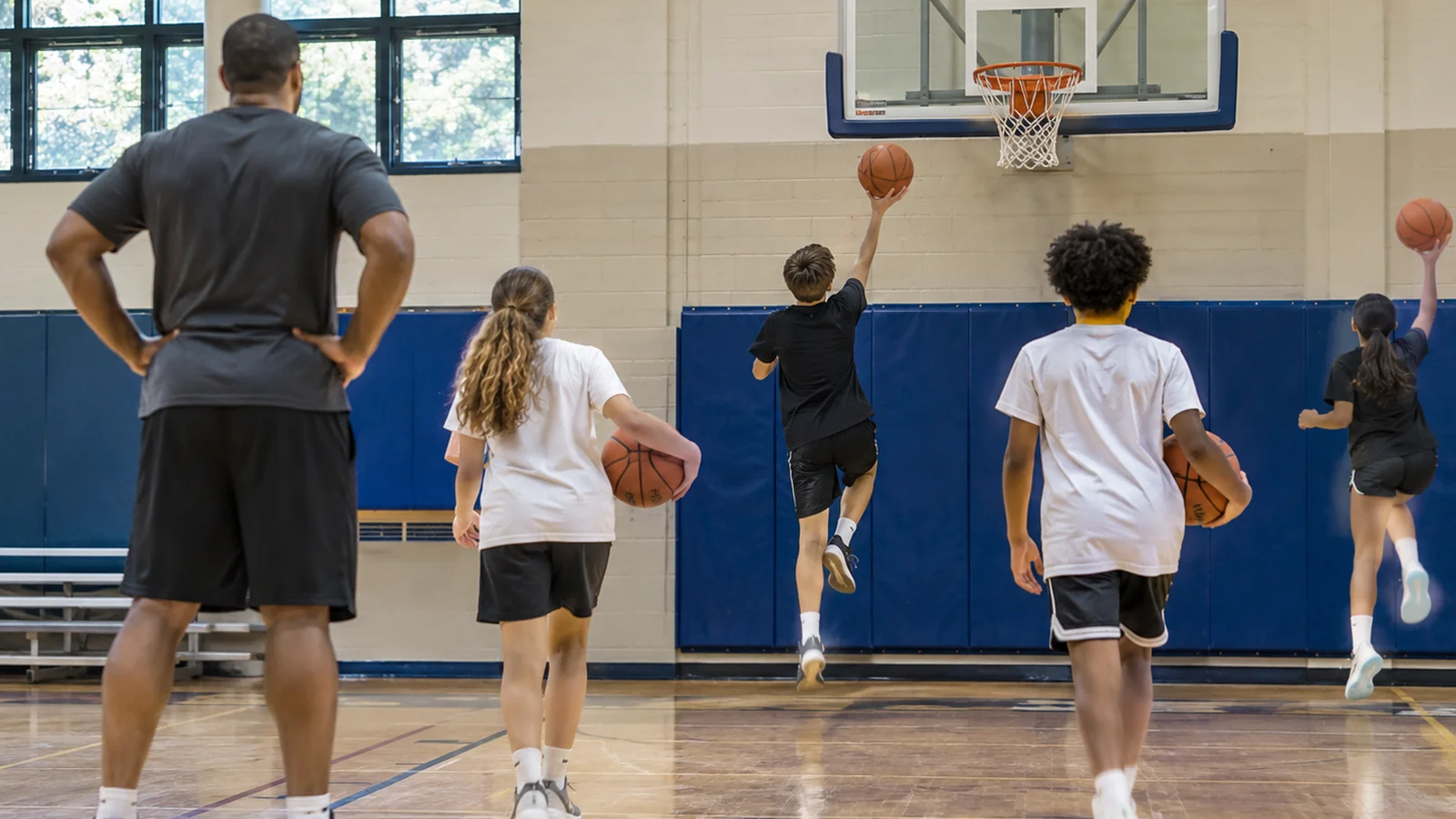
Teach basketball to kids through fun, simple games rather than long lectures. Introduce one skill at a time, demonstrate it, and let every child practice with a ball. Use small-sided games so everyone touches the ball, praise effort, and keep sessions short. Coaches should be trained and follow Safe Sport rules.
Last updated
- Use fun games instead of long lectures
- Teach one skill at a time with demonstrations
- Give every child a ball and many touches
- Keep sessions short and praise effort
- Train coaches and follow Safe Sport rules
Build the session around games, not lines
Start with a short, active warm-up game and keep every child moving with a ball. The Jr. NBA Rookie level is built around having fun, being active and learning basic fundamentals. Its curriculum uses fun games that teach skills, small-sided competitions such as 1v1, 2v2, 3v3 and advantages, random starts, and activities that make players decide.
A Rookie practice plan divides time sharply: 70% building skills, 10% team concepts, 10% competing, 5% values and 5% warm-up. That leaves most of the session for ball handling, passing and shooting games rather than long lectures or queues.
Match practice and game length to age
The NBA and USA Basketball participation tables give a practical starting point. Ages 7-8: 20-28 minute games once a week and 30-60 minute practices once a week. Ages 9-11: 24-32 minute games once or twice a week and 45-75 minute practices twice a week. Ages 12-14: 28-32 minute games twice a week and 60-90 minute practices two to four times a week.
Keep at least one rest day each week, and delay specialization in basketball until at least age 14. The guidelines say multi-sport play is not falling behind; it builds the base for later success.
Teach one skill, then let them use it
Canada Basketball's Learn to Train course for coaches of ages 8-12 breaks down shooting, loading, dynamic warm-ups, the 1-second advantage, spacing, footwork, and error detection and correction. Show the skill, give a two-minute drill, then move straight into a small-sided game that forces players to use it.
Correct one error at a time. If a child is struggling, reduce the difficulty rather than adding another instruction. The FUNdamentals course for ages 6-9 is designed for non-competitive settings, so keep score secondary and participation high.
Safety, screening and coach training
Canada Basketball's Safe Sport rules require more than one adult to be present with minor athletes, known as the Rule of 2. Coaches also complete screening: an Enhanced Police Information Check and Vulnerable Sector Verification are valid for three years, and a Screening Disclosure Form is completed annually.
The American Academy of Pediatrics recommends a preparticipation physical evaluation about six weeks before preseason, proper technique work with coaches, well-fitted shoes and knee pads, and a written emergency plan. A suspected concussion means removal from play and a doctor's clearance before return.
Frequently asked questions
How long should a 7-year-old's practice be?
The NBA and USA Basketball guidelines recommend 30-60 minutes once a week for ages 7-8. Games for that age group are recommended at 20-28 minutes, once a week, so the whole basketball commitment stays short.
Should young kids start with 5-on-5?
No. The Jr. NBA curriculum uses 1v1, 2v2, 3v3 and advantage games so every player gets touches and decisions. Five-on-five makes sense once players can pass, catch and move without the ball.
What coaching course should a parent take?
Canada Basketball's FUNdamentals course is aimed at coaches and parents working with ages 6-9 who play non-competitive basketball. The Learn to Train course is for ages 8-12 and is the prerequisite for Train to Train.
How many days a week should a child play?
The youth guidelines suggest one game and one practice a week for ages 7-8, one or two games and two practices for ages 9-11, and two games with two to four practices for ages 12-14. Keep at least one full rest day.
When should a child specialize in basketball?
The NBA and USA Basketball recommendation is to delay specialization until at least age 14. Playing several sports during childhood is presented as a foundation for later success, not as lost time.
Sources
How do you teach basketball dribbling · Basketball questions · First Time Youth Coach
Running a club or league? See software to run a sports club, a Spond alternative, free round robin generator, or build a tournament online.
Explore Club OS