
How do you teach soccer to beginners?
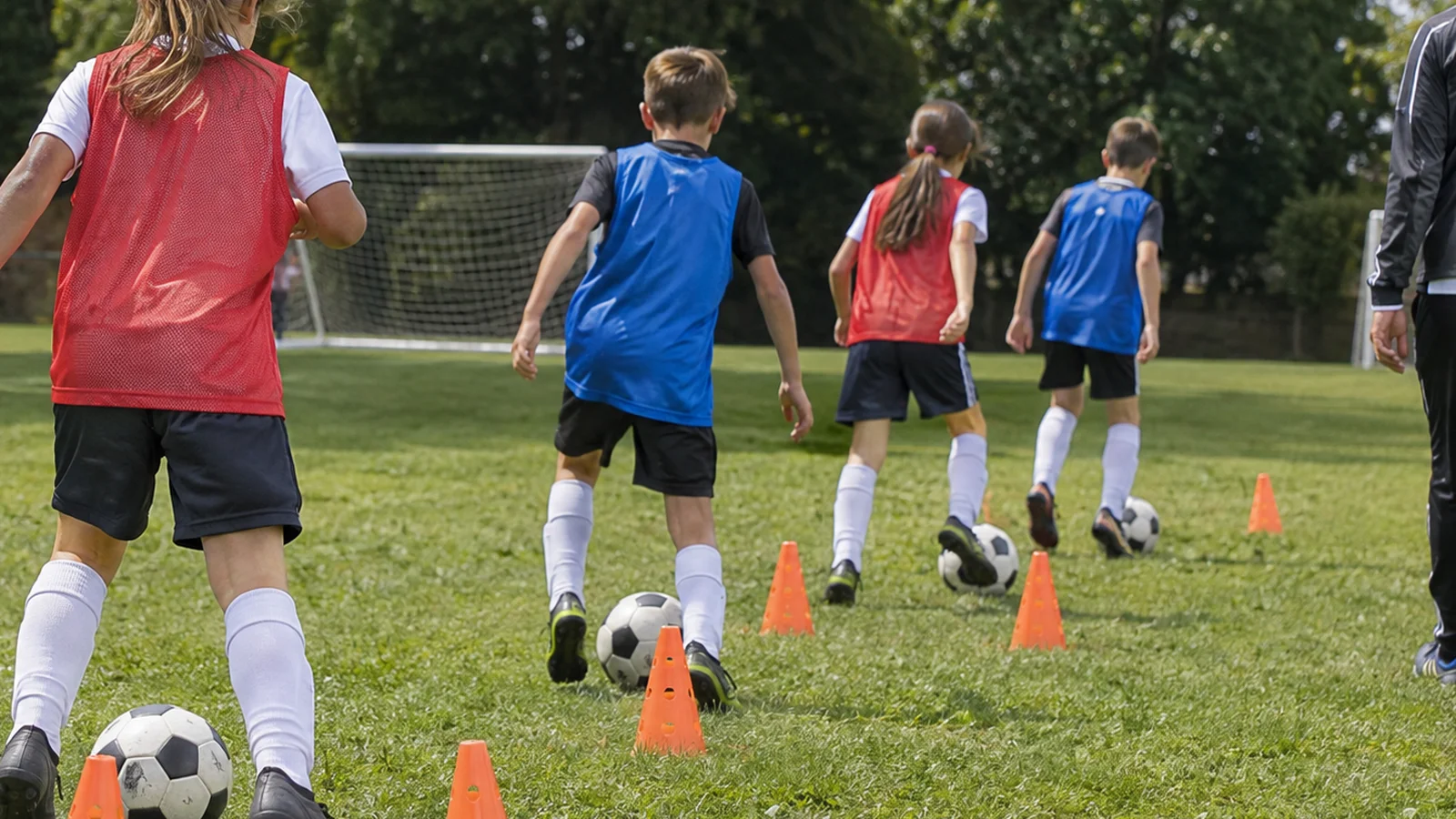
Begin with the ball at their feet: dribbling, turning, and short passes in small games. Keep instructions brief and demonstrate rather than lecture. Use cones and simple targets, then finish with a scrimmage. Praise effort and let beginners make mistakes. Fun and repeated touches matter more than perfect technique at first.
Last updated
- Start each session with a ball, not laps.
- Use games that hide repetition.
- Pair players for simple passing practice.
- End with free play and a scrimmage.
Start the first session with a ball, not laps
Canada Soccer's grassroots principles put high ball contact and game-realistic training first. Give every beginner a ball and let them dribble, turn and shoot within the opening minutes. Short demonstrations work better than long explanations because players copy what they see and learn by repeating the action.
AYSO describes its small-sided games as emulating classic street soccer, where children pick teams and play together. That format suits beginners because nobody is stranded on the sideline waiting for a turn. Set up a small area, divide into brief games, and rotate teams so every player is involved.
Teach dribbling, passing and shooting in that order
Begin with the ball at walking pace: toe taps, inside-of-the-foot touches and turns. Add a partner once the player can keep the ball within a few steps. Passing comes next, starting with short passes along the ground to a stationary target, then to a moving partner.
Shooting comes last, because it is easier to strike a still ball than to control one. Use a real goal or two cones as a target and keep the distance short enough that success is common. One coaching point per activity is plenty; beginners cannot process a list of corrections.
Match the session to the Canadian age bands
Canada Soccer's Grassroots Coach Education Program splits beginners into four workshops. Active Start covers U4 to U6 players, FUNdamentals covers boys U6-U9 and girls U6-U8, Learn to Train covers boys U9-U12 and girls U8-U11, and Soccer for Life starts at boys U13+ and girls U12+.
The first three workshops deal with players up to 12 years of age. Within the national grassroots model, which runs to Under 13, children play small-sided games with fewer than 11 players per team. Ontario Soccer's Learn to Train course for U10-U13 coaches works in a 7v7 and 9v9 environment, so the field and squad size grow gradually.
How often a beginner should train and play
AYSO says practices are held once or twice a week and games are usually on weekends. Teams may begin practice 2-3 weeks before the official start of the season. For a new player, that rhythm is enough; extra sessions help only if the child still enjoys them.
The Canadian 24-Hour Movement Guidelines recommend an accumulation of at least 60 minutes per day of moderate to vigorous physical activity for children and youth aged 5 to 17. Soccer practice counts toward that total, and so does a kickabout at home with their own ball.
Keep the scoreboard out of beginners' sessions
Canada Soccer continues to endorse the removal of scores and standings from grassroots soccer up to Under 13. That does not mean hiding the score in a scrimmage; it means judging the session by touches, decisions and effort rather than the result.
Use equal rotations and let players try different positions. A beginner who spends the whole game in goal or on the bench gets fewer ball contacts. The Canada Soccer small-sided guide is built around a play-centered approach for any age, level or ability, which fits a first season well.
Frequently asked questions
What gear does a beginner need for soccer?
AYSO requires shin guards for practice and games plus full-coverage shoes, and advises shoes designed specifically for soccer. It also says every child should ideally have their own ball. Ask the club whether the uniform is included in the fee before buying extras.
Are small-sided games better than full-field games for beginners?
For young beginners, usually yes. Canada Soccer says children up to Under 13 play small-sided games with fewer than 11 players per team, and AYSO says smaller teams give younger children more touches. More touches and more decisions are the point of the format, not the final score.
How do you keep beginners from losing interest?
Short activities, a ball each and frequent scoring chances keep attention. Canada Soccer's small-sided guide calls for a play-centered approach for any age, level or ability, and its grassroots principles prioritize fun and meaningful feedback. Stop an activity before the group gets bored rather than pushing through a long drill.
Do coaches need special training to teach beginners in Canada?
Canada Soccer runs four grassroots workshops: Active Start for U4 to U6, FUNdamentals, Learn to Train and Soccer for Life. The first three cover players up to 12 years of age. A volunteer parent can start with the workshop that matches the age group, then add the NCCP requirements the club asks for.
Sources
Soccer questions · First Time Youth Coach
Running a club or league? See Play 2 Earn Sports, a SportsEngine alternative, build a league schedule, or make a printable bracket.
Explore Club OS