
How do you play hockey?
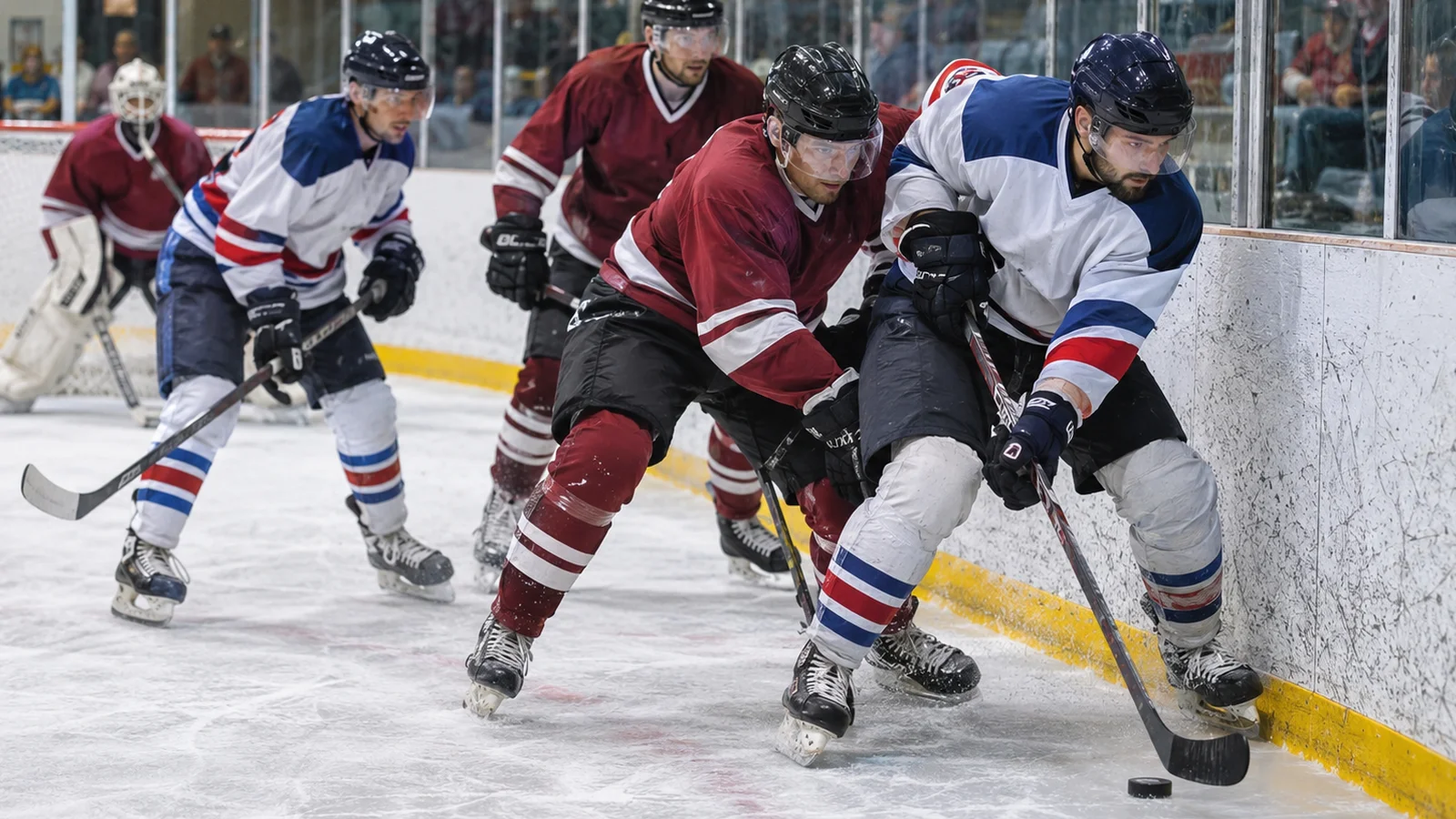
Two teams try to score by putting the puck in the opponent net. Players skate, pass and shoot, while defenders check legally and the goalie blocks shots. Games start with a face-off, have periods, and are governed by offside and penalty rules.
Last updated
- Only the goalie may use hands in the crease.
- Penalties send players to the box.
- The team with more goals wins.
Face-offs and the run of play
The team that puts the puck in the opponent's net more often wins. Play begins with a face-off, and every goal is followed by another face-off, so the game keeps restarting from a set position. Between whistles the clock runs and players change on the fly.
A goalie and five skaters make up each unit at even strength. USA Hockey's explanation of its youth penalty rule refers to normal 5v5 play, because a penalized team returns to full strength when the penalty ends.
Period lengths in the US and Canada
Periods run 20 minutes in USA Hockey and NCAA play. NFHS high school games use 15-minute periods, although a state can allow up to 17 minutes. Period length is set by the rulebook for each level.
Canadian minor hockey can look different. A U9 half-ice game has two periods with a run-time clock and cannot exceed 60 minutes in total.
Why USA Hockey removed tag-up offside
USA Hockey's youth and girls rules eliminated tag-up offside. Immediate offside now applies at every level except High School and Adult classifications, so the tag-up option is gone at those levels.
The change was designed to create more puck possession and quality decisions. USA Hockey says that once players adapt, it adds only two additional whistles per game. The attacking team has to gather the puck, look up and find an outlet instead of dumping it in.
Icing on the penalty kill and body checking
At USA Hockey Youth and Girls levels, a shorthanded team may not ice the puck. High School and Adult classifications are excluded from that rule. The aim is to keep normal 5v5 rules in play during a penalty, so the power play gets the advantage it earned.
Body checking is also tightly defined. For a check to be legal, the opponent must be in control of the puck and the checker must be trying to gain possession. USA Hockey emphasises competitive contact over hits meant to punish or intimidate.
How young kids actually play in Canada
Hockey Canada plays U9 games on half ice no larger than 100 ft by 85 ft (about 30.5 m by 25.9 m). The format is 4-on-4 plus a goaltender, shifts cannot exceed two minutes, and there is no icing or offside. Body-checking is not permitted.
USA Hockey has spent the past 10 years developing 8U players with cross-ice practices and games, and some districts now use cross-ice at 10U. Both countries shorten the playing area so young players get more puck touches and more decisions.
Frequently asked questions
What equipment do you need to play hockey?
You need skates, a helmet with a cage or shield, gloves, a stick, shin pads, hockey pants, shoulder pads, elbow pads and a mouthguard. Goalies need additional equipment, including leg pads, a blocker, a catching glove and a goalie mask. Many associations publish their own equipment checklist for new families.
How long is a hockey game?
In the US, USA Hockey and NCAA periods are 20 minutes, and NFHS high school periods are 15 minutes. Canadian U9 half-ice games are shorter: two periods with a run-time clock and a 60-minute maximum, so the game fits inside an hour.
Can you ice the puck on the penalty kill?
At USA Hockey Youth and Girls levels, no. The shorthanded team may not ice the puck, while High School and Adult classifications are excluded. USA Hockey says the rule keeps normal 5v5 play during a penalty, so the power play keeps the advantage it earned.
Is body checking allowed in youth hockey?
USA Hockey allows legal body checking only when the opponent is in control of the puck and the checker is trying to gain possession. In Canadian U9 half-ice hockey, body-checking is not permitted at all; incidental contact can happen, but the rule is still no checking.
Sources
What does hockey wax do · Hockey questions · Find a hockey team
Running a club or league? See Play 2 Earn Sports, a SportsEngine alternative, build a league schedule, or make a printable bracket.
Open Next Play