
How do you improve hockey IQ?
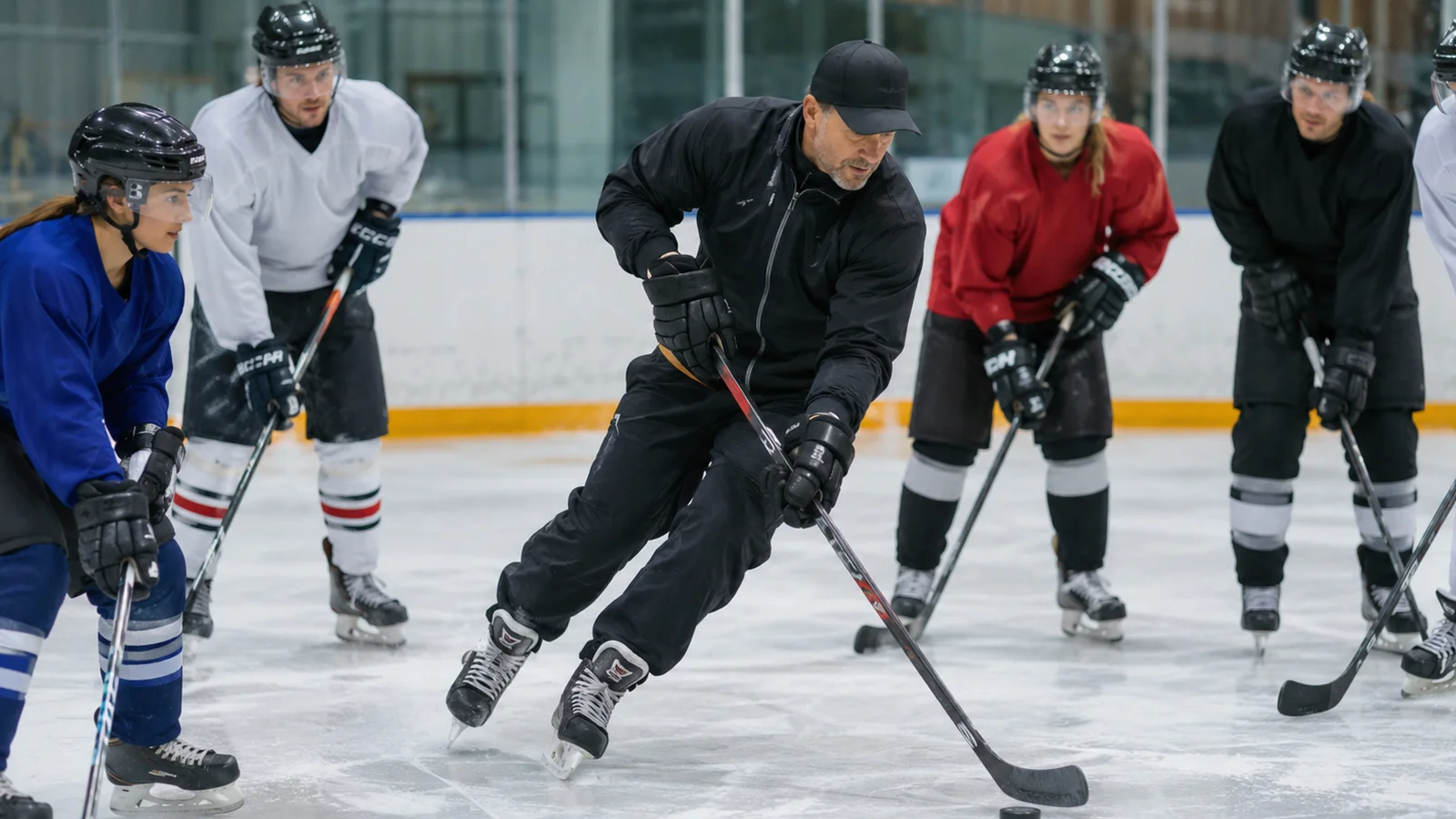
Build hockey IQ by watching games closely and asking why players move where they do. Study positioning, puck support, and scanning before you receive the puck. Play small-area games that force quick decisions, review video with a coach, and try other team sports. Coaches can also use games-based practices that make players solve problems.
Last updated
- Watch games and ask why players move
- Use small-area games with quick decisions
- Review positioning and puck support
What small-area games do that full-ice drills cannot
USA Hockey's Paul Moore describes hockey IQ as decision-making and situational awareness. In a small-area game, players get more confrontations and no time or space, which forces them to make quicker decisions. A full-ice 1-on-1 that starts in the corner is not a game situation, because a player rarely skates the length of the ice against a single checker.
Moore's alternative is a 1-on-1 or 2-on-2 battle low in the zone. Everyone on the ice is involved, so nobody stands in line waiting for a turn. He argues that the format challenges the best player and the weakest player at the same time, because the space is tight for both.
How long a decision drill should last
For young players, Moore keeps drills short. He says coaches should not run a drill for eight or nine minutes, and he suggests six minutes in a tight area before moving on. Long lines and long drills both reduce the number of decisions each player makes.
Count repetitions instead of minutes once players are older. A drill that keeps everyone moving gives each player more puck touches than a drill where the group waits in line for one shot.
Change the rules to force puck support
USA Hockey's games-based approach shows how small rule changes alter what players do. If a coach dumps the puck behind the net at every shift change, players stop free-flowing and start breaking the puck out. Split the ice down the middle and call offsides, and they come lower to support each other instead of stretching the ice.
A bonus point for creating a turnover before the other team crosses the offside line pushes the forecheck to be more aggressive. These constraints make players adapt to what the game presents, which is the skill that transfers to a real game.
Turn video review into a question session
Pause the video before the pass and ask the player what options they had. Then ask what support was available behind the puck. Watching a full game passively does little; stopping on decisions and asking for alternatives builds the habit of scanning.
Keep the clips short and specific to one player. A winger can review their own shoulder checks, a defenceman can review gap control, and a goalie can review how the play developed before the shot.
Let the game be the teacher at 12U and down
Moore's advice for minor hockey is to let the game be the teacher and have coaches get out of the way, especially at 12U and below. That does not mean no coaching; it means teaching after the shift instead of stopping every repetition.
The games-based approach reaches the same conclusion. When players explore and solve problems themselves, they learn to adapt, while constant whistles and instructions slow the session and take decisions away from them.
Frequently asked questions
What is hockey IQ?
Hockey IQ is decision-making and situational awareness on the ice. USA Hockey's Paul Moore uses that phrase to describe reading the play, choosing when to pass or shoot, and finding supporting teammates. It shows up in small details: head up before receiving the puck, moving into open ice, and making the simple play under pressure.
At what age should players start small-area games?
Moore argues that the earlier players start, the better their decision-making develops. He also says that at 12U and down, coaches should let the game be the teacher. Tag and other simple games work for the youngest groups because they still create chasing, evading and quick choices.
Can hockey IQ improve without ice time?
Yes, partly. Watching a period with one player in focus and pausing to ask why a pass was made builds pattern recognition. Off-ice puck handling helps too, but it cannot copy the pressure of a live checker. Use off-ice work to reinforce scanning and decisions, then test them in small-area games.
Why are full-ice drills less useful for hockey sense?
Full-ice drills often give one player the puck while others watch or wait. Moore points out that a full-ice 1-on-1 from the corner is not a game situation, because players rarely skate the whole rink against one checker. Small-area games put everyone in the play and force decisions with less time and space.
Sources
How do you improve your hockey shot · Hockey questions · Coach app
Running a club or league? See Play 2 Earn Sports, a LeagueApps alternative, free tournament maker, or build a league schedule.
Open Next Play