
How do you coach youth hockey?
Coach youth hockey by teaching skating, puck skills and decision-making in small areas, with lots of repetitions and fun. Hockey Canada recommends a 3-to-1 practice-to-game ratio and says U9 teams should use half-ice games. USA Hockey stresses that tryouts and evaluations should find the best place for each player to develop.
Last updated
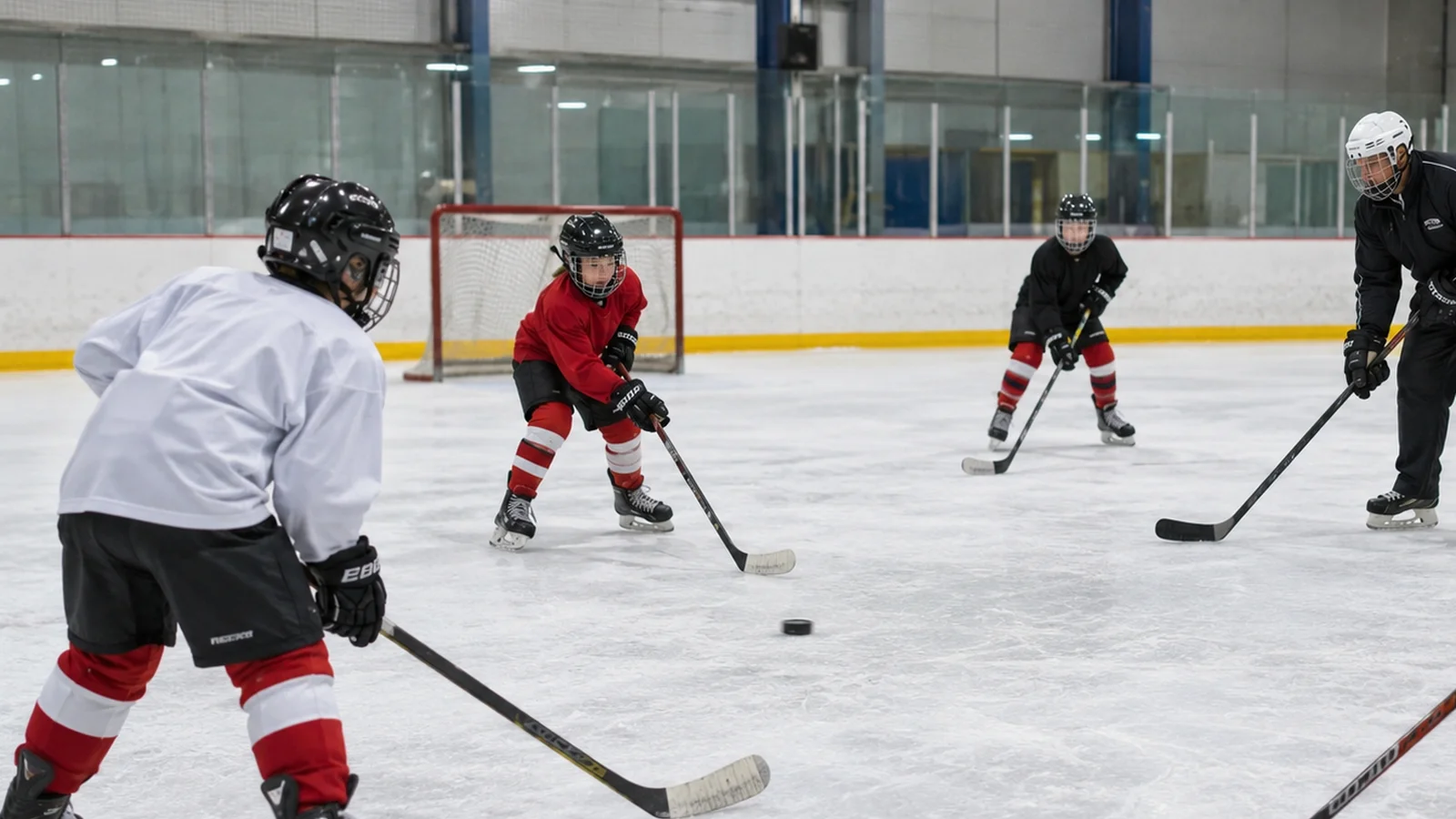
- Plan practices around stations so every player moves constantly.
- Teach body contact rules appropriate to the age level.
- Use small-area games to build awareness and compete level.
Plan the season around a 3-to-1 practice ratio
Hockey Canada's U9 seasonal structure puts the ideal practice-to-game ratio at 3:1, three practices for every game played. The same page sets a minimum of four practices or skill sessions before formal evaluation or selection starts, and says September should be a development month with no games and only practices where an association can schedule it.
That ordering matters for a first-year coach. Skill work comes before team selection, and the early season is for teaching rather than competing. If your association starts school before Labour Day, Hockey Canada still requires four skates or practices beginning the week after Labour Day before evaluation begins.
What a half-ice U9 game looks like
Hockey Canada caps the U9 half-ice surface at 100 feet by 85 feet, about 30.48 m by 25.91 m. Games are 4-on-4 plus a goaltender in full equipment, played in two periods with a run-time clock that does not exceed 60 minutes in total. Shifts cannot last more than two minutes, and players change on the buzzer or whistle while play continues.
Several normal rules are simplified. There is no icing and no offside, face-offs start each half, and no score is kept. Incidental contact can happen, but body-checking is not permitted. A minor penalty means the player sits out the next shift while the team stays at even strength instead of playing shorthanded.
Ice time and position rotation
Hockey Canada tells U9 coaches that all players should have the same opportunity to contribute, regardless of skill, and that shortening the bench to win games is not permitted. Every player and goaltender should get fair and as close to equal ice time as possible.
The recommendations go further: all players play all positions, including forward, defence and goaltender, and there are no full-time goaltenders. Every player gets a chance to play goal, and, if numbers allow, every player gets a chance to start a game or a half. That is a development rule, not a reward for the strongest players.
Coaching certification in Canada and the US
Hockey Canada says certification is not required at all levels; its minimum standards sit on the NCCP Levels and Requirements page, and each provincial member can add requirements. Where certification is required, it includes a successfully evaluated written assignment and an online multi-sport evaluation through the Coaching Association of Canada, and the process can take a month up to two full hockey seasons.
USA Hockey requires both registration and certification before a coach can take part in team activities. That includes an online age-specific module for the age level being coached plus a certification clinic; coaches start at the 6U/8U clinic for the youngest levels or Level 1 for 10U and above. Registration is done online each year, and a background screening and Safe Sport training are part of the package.
Frequently asked questions
How many practices should a U9 team have before evaluations?
Hockey Canada requires a minimum of four practices or skill sessions before formal evaluation or selection begins. It also recommends a 3-to-1 practice-to-game ratio across the season, so most weeks should include more practices than games.
Is body-checking allowed in U9 hockey?
No. Hockey Canada's U9 half-ice rules say incidental contact may happen, but body-checking is not permitted. A minor penalty is handled by sitting the player out for the next shift while the team stays at even strength.
How long is a U9 half-ice game?
Hockey Canada calls for two periods with a run-time clock, not more than 60 minutes in total. Shifts cannot exceed two minutes, and play continues through line changes on the buzzer or whistle.
Do youth coaches need certification?
It depends on the country and level. Hockey Canada says certification is not required at all levels and directs coaches to its NCCP Levels and Requirements page and their provincial member. USA Hockey requires registration plus a certification clinic and an age-specific module before a coach can join team activities.
Sources
Hockey questions · First Time Youth Coach
Running a club or league? See Play 2 Earn Sports, compare team and club apps, build a league schedule, or make a printable bracket.
Explore Club OS