
What does basketball do to your body?
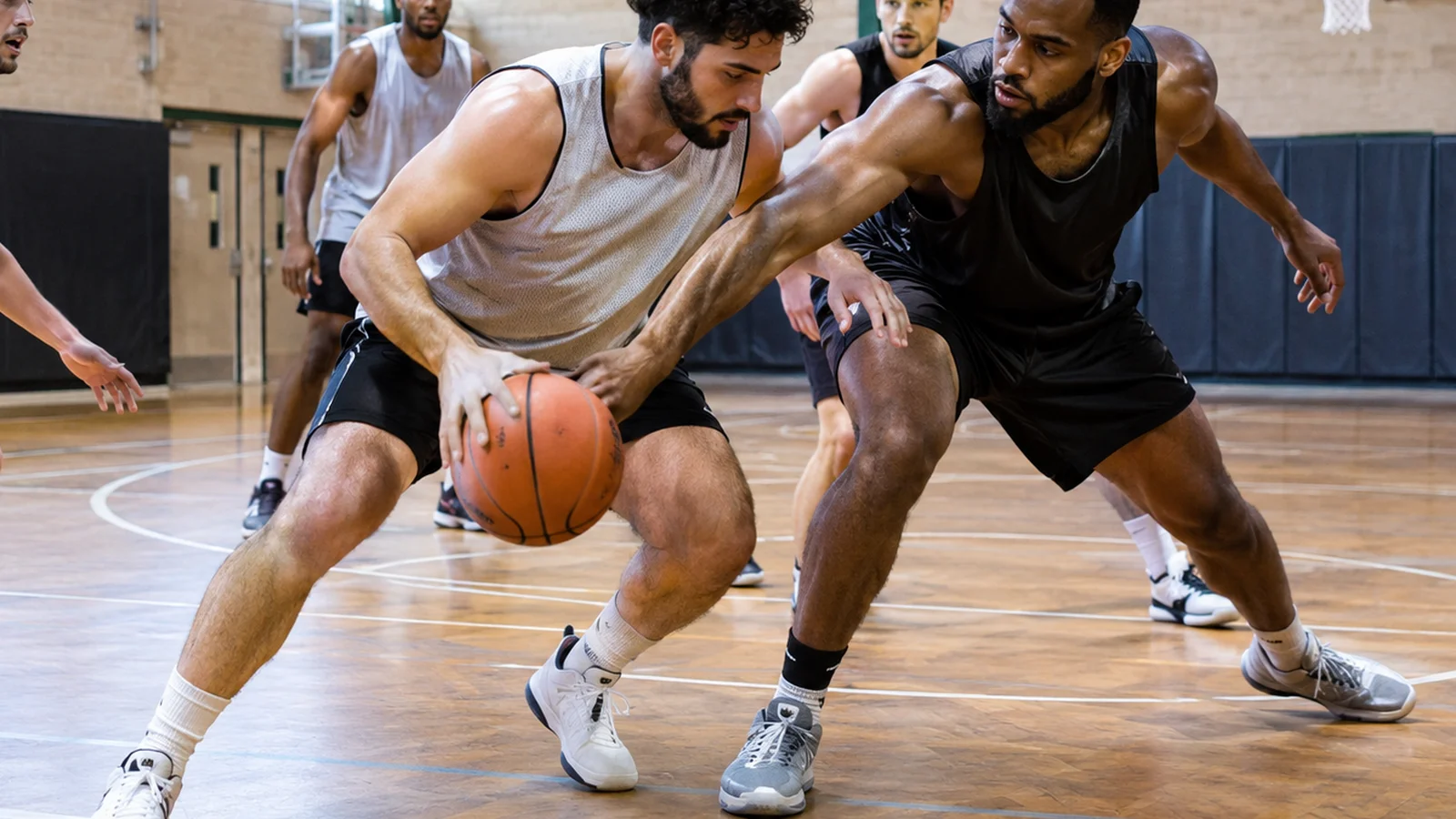
Basketball improves cardiovascular fitness, coordination, agility and bone strength. Jumping and running are bone-strengthening activities, and the sport builds leg and core muscles. It also carries injury risk, especially ankle sprains, so warm up, wear supportive shoes and follow contact rules. Children should get at least 60 minutes of activity daily.
Last updated
- Basketball builds cardiovascular fitness and agility
- Jumping and running strengthen bones
- The sport develops leg and core muscles
- Ankle sprains are a common injury risk
- Children need at least 60 minutes of daily activity
Cardio and endurance on the court
Basketball is repeated bursts: sprint, stop, jump, land, recover. That pattern trains the heart and lungs and asks for quick changes of direction. For children and adolescents aged 6 to 17, the CDC target is at least 60 minutes of activity every day, and basketball can supply a large part of it.
The aerobic benefit depends on how much the player actually moves. A game with long bench stretches or a practice of standing in lines delivers less than small-sided games and continuous drills. Coaches can keep everyone active by using shorter lines and rotating groups quickly.
Bones, muscles and balance
Jumping and running are bone-strengthening activities, and the CDC recommends them at least 3 days a week for children and adolescents. Rebounds, layups and defensive slides load the legs and hips, while holding position and passing work the core and shoulders. Balance improves as players learn to land and stop under control.
Good technique supports those gains. The AAP lists ankle strengthening and plyometric exercises during preseason training as ways to help prevent ankle sprains. Those exercises are best introduced by a coach or trainer who can check landing and cutting mechanics.
Injuries basketball players commonly get
Ankle sprains are one of the most common injuries in jumping sports, often when a player lands on another player's foot. Fingers and wrists get jammed and sprained. Knee injuries happen on cuts, pivots and landings, and ACL tears are more common in females than males. Shoulder dislocations can occur when diving or rebounding.
Overuse shows up too: patellar tendonitis, known as jumper's knee, and Osgood-Schlatter disease in younger athletes. Concussions can follow a fall or collision, and a player with a suspected concussion should not return until a doctor clears them.
How to manage the training load
A sports physical about 6 weeks before the season gives a clinician time to address problems. The AAP also recommends adding no more than 10% to 20% to weekly training loads at a time; if a child trains 1 hour a day, the next week should add no more than about 12 minutes. Young athletes should not be required to play or train more than 5-6 days a week and should get 2 to 3 months off from a sport each year.
Pain is information. The AAP says athletes should sit out when they have pain and seek advice if it does not improve, and they should never take ibuprofen or other pain-relieving medicine before playing because it can mask pain. A coach who ignores that is not protecting the player.
Frequently asked questions
Does basketball build muscle?
It uses the legs, hips, core and shoulders repeatedly, and jumping and running are bone-strengthening. The AAP notes that bones, muscles and other tissues need time to recover between sessions. Muscle gain also depends on overall training, food and sleep, so basketball alone is not a body-building program.
Is basketball bad for your knees?
It can stress them. Knee injuries happen on cutting, pivoting, landing and contact, and repetitive jumping can cause jumper's knee or Osgood-Schlatter disease in younger players. That does not make the sport bad; it means load, technique and recovery need attention.
How long should a child rest between basketball seasons?
AAP guidance suggests at least 2 to 3 months off from any given sport each year, which can be split into one-month blocks. That break can include other sports or free play. A child who plays year-round on multiple teams may need the break most.
Does basketball count toward the 60 minutes of daily activity?
Yes. The CDC target for children and adolescents aged 6 to 17 is at least 60 minutes of activity every day, and a practice or game can contribute. The time should include bone-strengthening activity such as jumping or running on at least 3 days a week.
Sources
Basketball questions · Find a basketball team
Running a club or league? See Play 2 Earn Sports, compare team and club apps, free tournament maker, or build a league schedule.
Open Next Play