

In this guide
A club planning question: How can we handle a field closure without coaches relaying the update one family at a time?
What one field closure looks like today
Illustrative example, not a real club.
5:15 p.m. The city emails: all grass fields closed tonight and tomorrow.
- The director texts the six coaches who have games.
- Each coach messages their team in a different app.
- Somebody has to tell the referees. Nobody is sure who.
- The opposing club hears last, from a parent.
- On Saturday morning, one team turns up anyway, because their coach was at work and saw the text late.
Six games, one closure, dozens of separate messages, and still one team at an empty field.
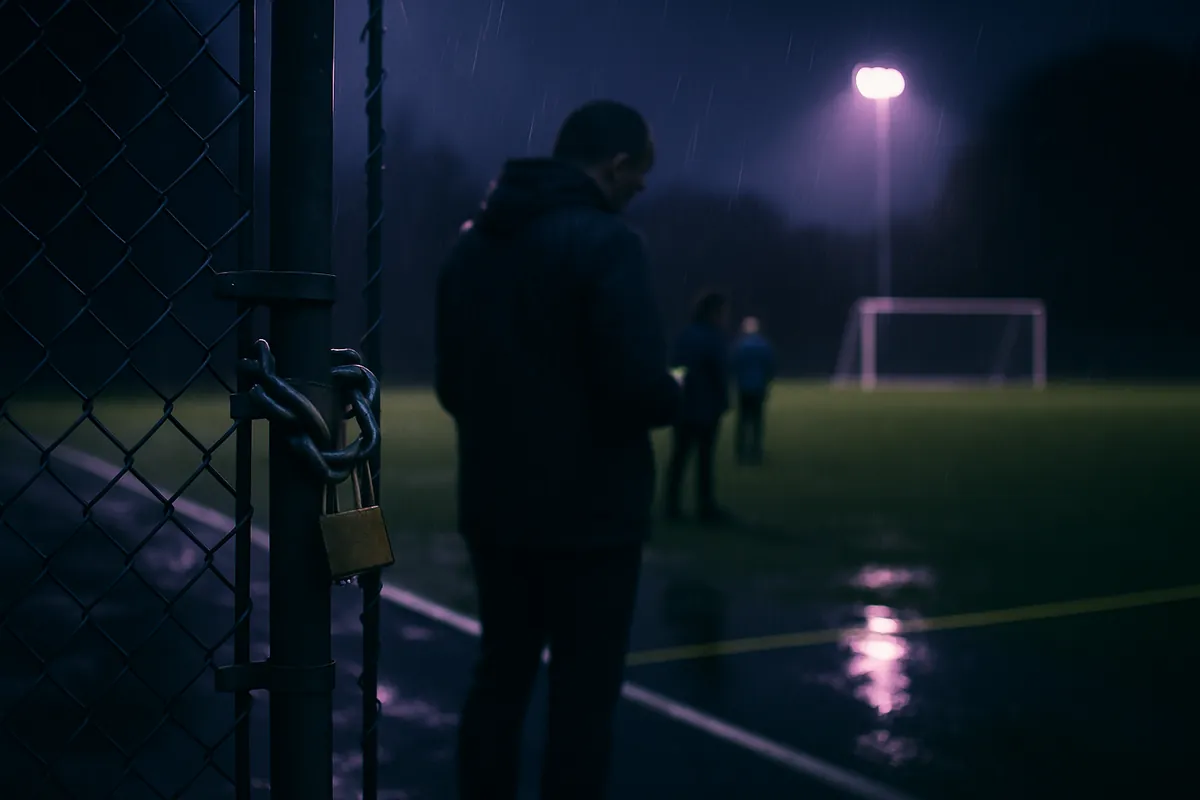
Where a missed update creates extra work
- Volunteer hours. The director and coaches may spend time relaying the same update through separate channels.
- Referees and opponents left out. A missed closure update can waste a trip and strain those relationships.
- Wrong-field mornings. A family may still arrive at a closed facility if no one confirms the change reached them.
- Make-up games left unresolved. A postponed game can be overlooked when no one owns the new slot.
Write a one-page weather and field-closure policy
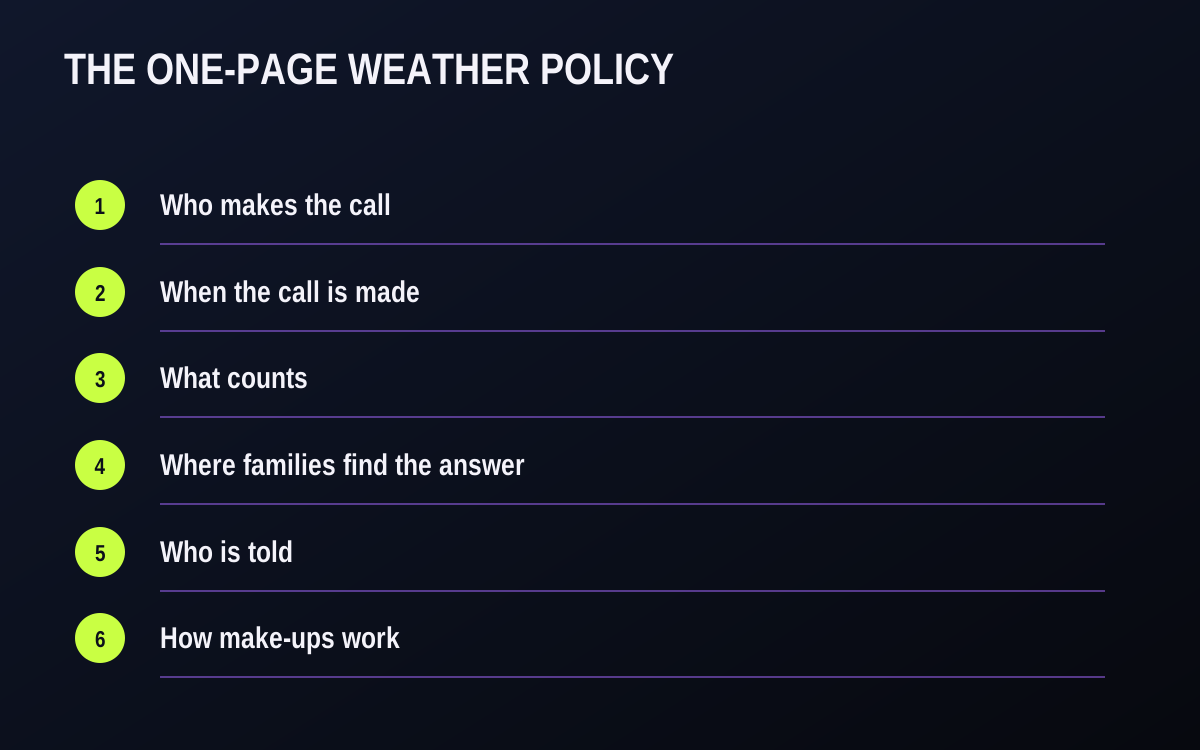
Put these six lines in your club handbook and share them at registration:
Who makes the call.
One named person per day (and a backup), not every coach.
When the call is made.
For example: weeknight games by 3:00 p.m.; weekend games by 7:00 a.m. on game day, or earlier if the city closes fields.
What counts.
Follow city or facility closures. For lightning, stop play and follow the governing body's safety plan; do not wait for a schedule edit.
Where families find the answer.
Check the facility alert and club schedule together. A closure or lightning safety instruction takes priority even if the game still appears on the schedule.
Who is told.
Plan to contact both teams, their families and coaches, plus the referee or assignor. Assign someone to confirm urgent messages were received; sending is not proof of reading.
How make-ups work.
Who picks the new slot, how soon, and that the make-up appears in the schedule like any other game.
The five-step rainout routine
1. The named person makes the call on time, or follows an earlier facility closure or lightning safety instruction immediately.
2. Update each affected game in the schedule. Mark it off or move it through the supported workflow, and alert people directly if the safety decision cannot wait for the edit.
3. Notify and confirm everyone affected. Use supported schedule notices for linked accounts, then confirm the coaches, opposing side and referee or assignor where needed. A sent notice does not prove it was read.
4. Ask families to confirm the new time where RSVPs are available. Follow up directly with anyone whose response is missing.
5. Aim for a same-week make-up when feasible. Check facility and team availability and conflicts before publishing; do not assume every game type has an automatic clash block.
Indoor sports close too. A rink can lose its ice, a gym can be unavailable or a dome can lose power. Use the same decision owner, safety-first update and confirmation checklist; the reason and the people to contact may differ.
Worked example — a rainout decision timeline
Illustrative example, not a real club.
A club has a Saturday 10:00 a.m. under-10 game on a grass field, with a weekday deadline policy of 3:00 p.m. and a weekend deadline of 7:00 a.m. Here is the morning, counted back from the start time.
| Time | What happens | Who |
|---|---|---|
| Friday evening | Check the forecast and the facility's closure page. If heavy rain is certain, make the call now rather than waiting | Named decision-maker |
| T-3h (7:00 a.m.) | If no earlier closure or safety instruction has already stopped play, check the facility alert and field condition; decide on, moved or postponed | Named decision-maker |
| T-2h50 (7:10 a.m.) | If off, alert anyone already travelling and update the affected game through its supported schedule workflow | Club scheduler |
| T-2h45 (7:15 a.m.) | Use supported notices for linked accounts; directly alert and confirm affected coaches, the opposing side and families where needed | Club scheduler |
| T-2h30 (7:30 a.m.) | Confirm the referee or assignor knows, including when an assigned league referee was included in a notice | Club scheduler |
| T-90m (8:30 a.m.) | Where RSVPs are available, check missing replies and follow up with those families | Each coach |
| T-60m (9:00 a.m.) | Phone families who still have not confirmed; check that the facility closure is clearly communicated | Team manager |
| Same day or next | Check venue and team availability, review conflicts, then publish a feasible make-up slot | Club scheduler |
If the game stays on, say so after checking the facility's status and safety plan. An unchanged schedule never overrides a facility closure or lightning instruction. For lightning or storms during a game, follow the governing body's rule first; update the schedule afterwards if the game needs a make-up.
A notice you can copy:
POSTPONED: U10 Red vs. Eastview, Saturday 10:00 a.m., Riverside Field 3
Reason: City closed all grass fields after overnight rain.
New time: To be confirmed by Wednesday. Check the updated schedule; we will follow up when a new time is set.
Please: Please confirm your team received this closure update. We will ask for availability when the new time is set.
Checklist: rainout morning
- The facility closure or lightning safety instruction was followed immediately.
- The named person made the call by the policy deadline when no earlier safety instruction applied.
- Affected games were updated in the schedule; urgent direct alerts did not wait for that edit.
- Both teams, families and coaches were contacted, and urgent messages were confirmed where needed.
- The referee or assignor confirmed they know.
- Families without a response were followed up through a direct message or call.
- The make-up slot was checked for facility and team availability before publication.
Common mistakes
- Coaches making the call on their own. Two coaches at the same park can reach two different decisions. One named person decides.
- Waiting until families are in the car. A call made after the deadline turns a postponement into a wasted trip. Hold the deadline even when the forecast is unclear.
- Forgetting the other side. The opposing club and the referee are easy to miss when the message goes to "our families".
- Leaving the make-up for later. A postponed game without a new date can drift to the end of the season, when fields are scarce.
How Play 2 Earn Sports supports this
- Supported game changes can prepare in-app notices for linked affected-team accounts. Eligible accounts may also receive email or push depending on preferences, contact details and devices. Confirm urgent recipients directly; a sent notice does not prove delivery or reading.
- An assigned referee on a league fixture or match is included in that notice audience. For other game types, contact the referee or assignor yourself. Confirm urgent closures even when a referee was included.
- Pending edits to the same game can be combined within two minutes when the old and new starts are more than three hours away. A change close to either start is due immediately. Each affected game is handled separately; due time is not proof of delivery.
- Manual placement of a make-up tournament fixture blocks a booked field or team and shows venue-hours and blackout warnings. For league make-ups or other paths, check facility and team availability before publishing.
- A published schedule is not regenerated over. Rescheduled games are not wiped out by re-running the schedule.
- Where RSVPs are available, coaches can see missing replies and follow up with those families.
- A child can have more than one linked parent or guardian. Check that the relevant accounts are linked and able to receive notices; do not assume each guardian saw the change.
See a field closure handled from the schedule.
Frequently asked questions
One named person for each day, with a backup, following the club's written policy and any closure by the city or facility. Coaches on site should not make the call alone.
Set fixed deadlines in your policy, for example 3:00 p.m. for weeknight games and 7:00 a.m. for weekend games, and announce earlier whenever the city or facility closes fields.
Follow facility and lightning safety instructions first, even if the schedule has not changed. Update each affected game, use supported notices for linked accounts, and directly confirm coaches, the opposing side, families and the referee or assignor as needed. A schedule edit does not prove anyone read the notice.
A referee assigned to a league fixture or match is included in its change-notice audience. For other games, or if referees are booked through an assignor, contact them yourself. Confirm an urgent closure even when an assigned referee was included.
Aim for the same week when feasible. Check the venue and teams for availability and conflicts before publishing the new slot; do not assume every scheduling path has an automatic clash block.
Starter is free for clubs with up to 10 teams. Pro is $49.67 USD a month for 11 to 25 teams. Unlimited is $99.67 USD a month for 26 or more teams. Every feature is on every plan, and players and parents are always included. See pricing.
Related guides
- Parent communication guides: every parent communication guide in one place.
- Parents keep missing schedule changes
- Coaches getting late-night parent messages
- Sports league scheduling software
- Referee scheduling software
- Pricing
